All-Metal Locking Design
Provides reliable prevailing torque without relying on nylon inserts.

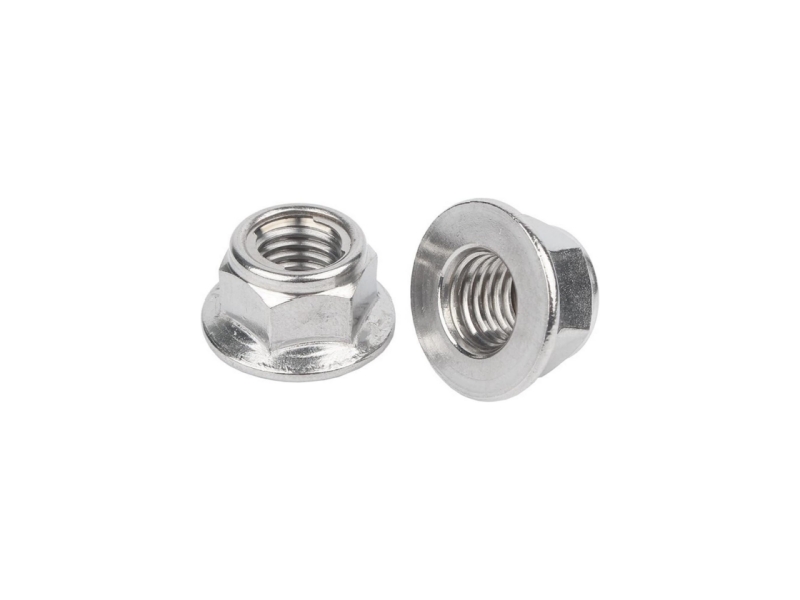
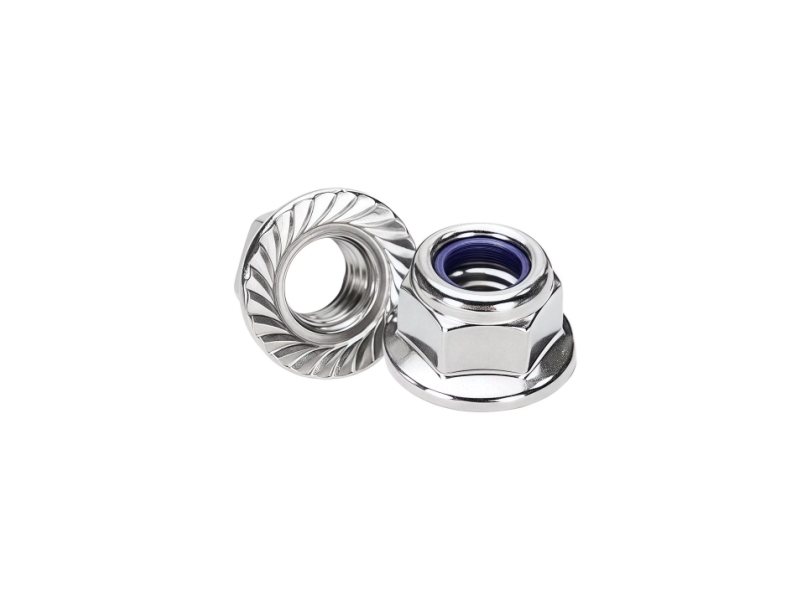
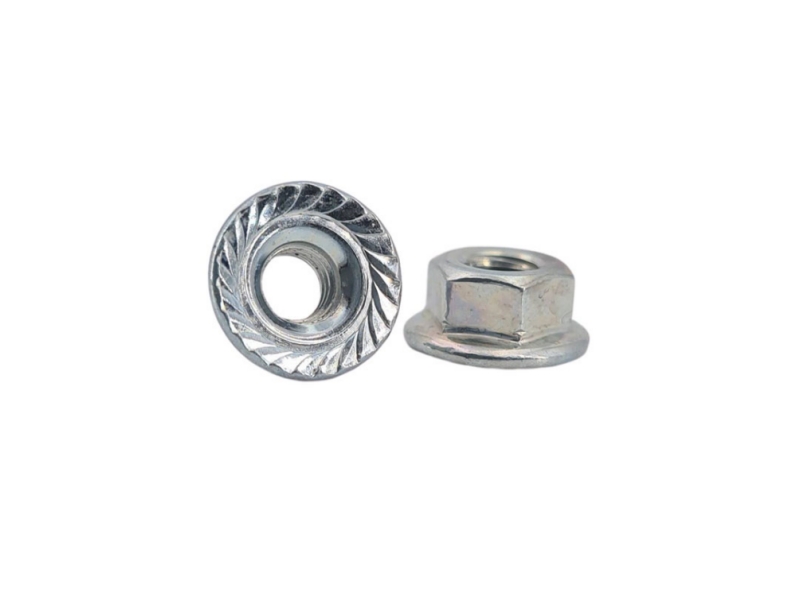
DIN 6927 is a prevailing torque type hexagon flange nut with an all-metal locking function, designed to prevent loosening caused by vibration and dynamic loads. Unlike standard flange nuts, DIN 6927 integrates a deformation-based locking section that generates additional prevailing torque during installation.
With its built-in locking capability, wide bearing flange, and durable metal construction, DIN 6927 nuts are widely used in automotive assemblies, heavy equipment, railway systems, machinery manufacturing, and industrial fastening applications where secure connections are required.
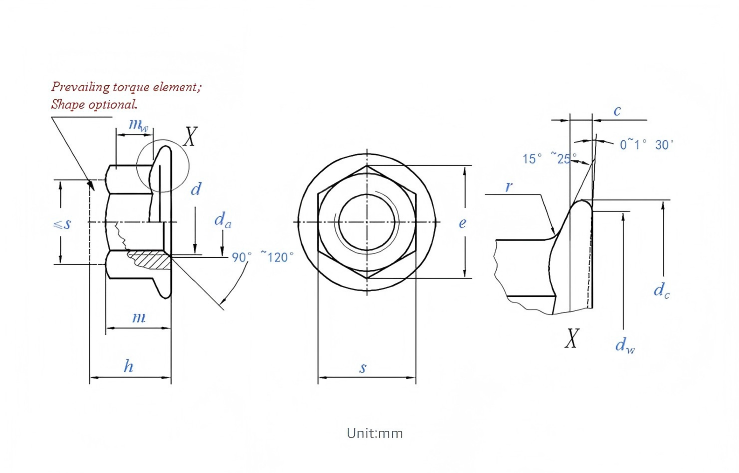
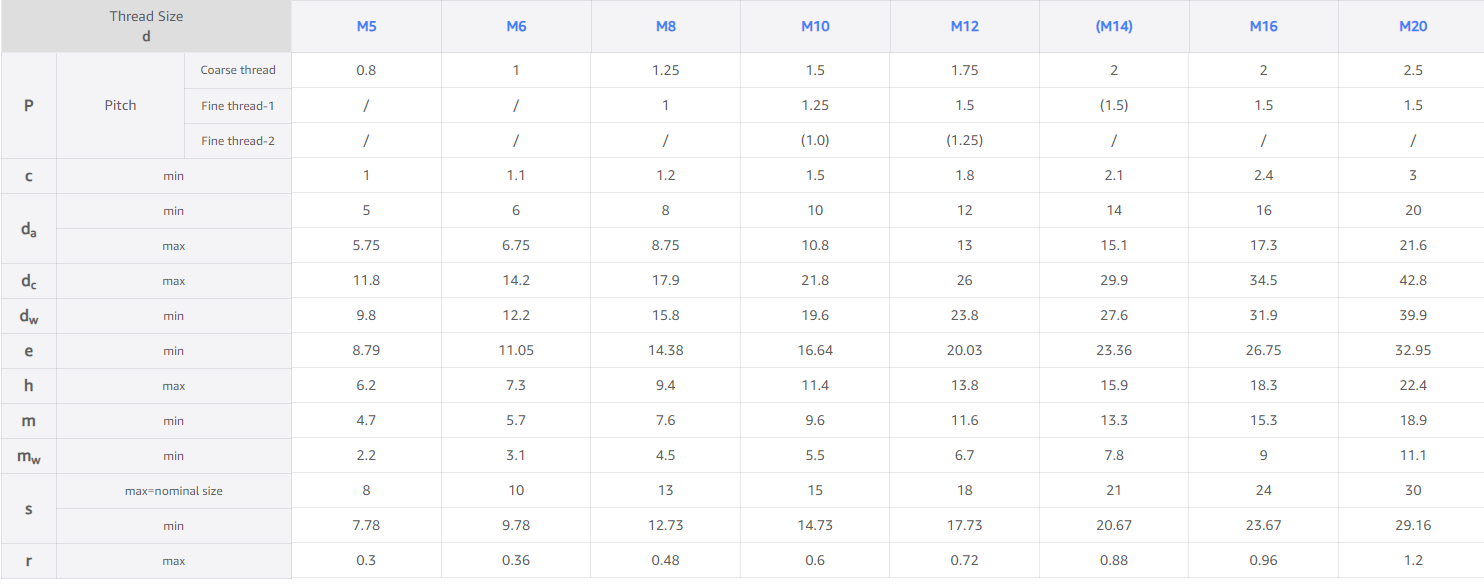
DIN 6927 and DIN 6926 are both hexagon flange lock nuts designed to prevent loosening under vibration. The main difference is their locking structure.
DIN 6927 and DIN 6926 are both hexagon flange lock nuts designed to prevent loosening under vibration. The main difference is their locking structure.
DIN 6926 uses a nylon insert locking system, where the nylon ring creates friction against the bolt thread to prevent loosening. It offers reliable locking performance for general industrial applications but has limitations in high-temperature environments due to the nylon component.
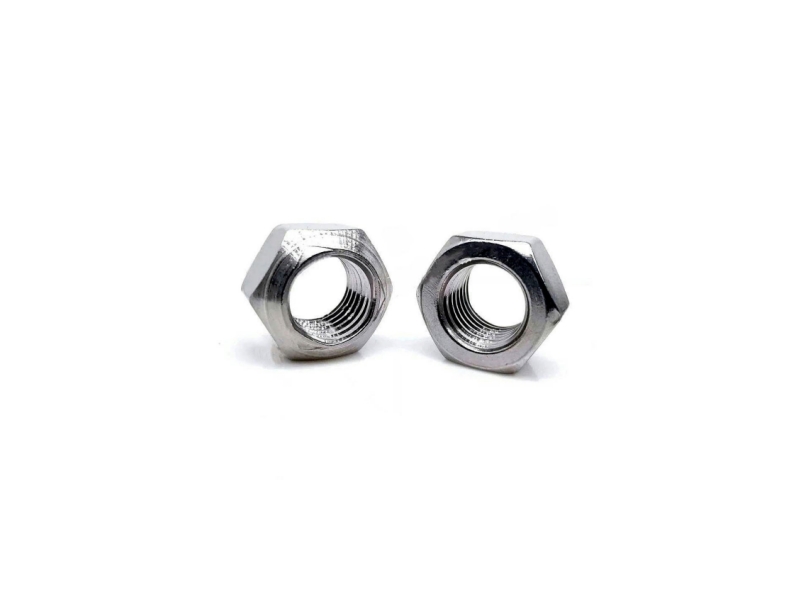
DIN 6927 uses an all-metal prevailing torque locking system, where the deformed metal section generates additional thread pressure and friction. Without any plastic parts, it provides better performance under high temperatures, heavy vibration, and demanding working conditions.
Provides reliable prevailing torque without relying on nylon inserts.
Enlarges the contact area and improves load distribution.
DIN 6927 is used for applications requiring secure fastening under vibration or dynamic loads, such as automotive, machinery, and industrial equipment.
The main difference is the locking function. DIN 6927 includes an all-metal prevailing torque mechanism, while a standard flange nut only provides increased bearing surface without anti-loosening performance.
Yes. Custom materials, finishes, packaging, and special thread requirements are available.
DIN 6923 is a standard flange nut without a locking mechanism, while DIN 6927 is an all-metal prevailing torque locking flange nut.