Perfect Flush Surface
The 120° countersunk head embeds fully into the material, creating a smooth, flat surface that allows for seamless stacking and interference-free sliding of adjacent parts.

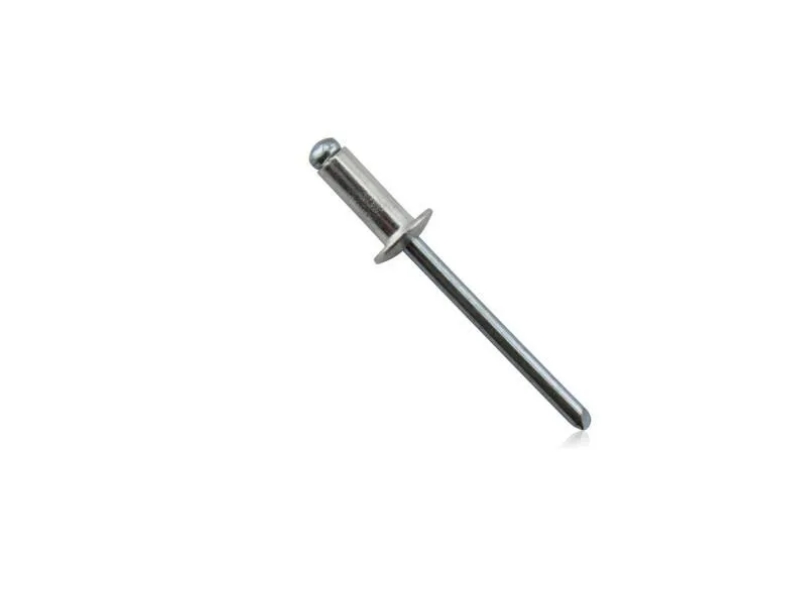
DIN 7337B countersunk blind rivets are high-quality 120° countersunk-head break-mandrel rivets designed for applications requiring a smooth, flush surface after installation. Unlike standard dome head blind rivets, the countersunk head sits into a pre-machined countersunk hole, eliminating any external protrusion and providing a clean, aerodynamic, and space-saving finish.
Designed for one-sided installation, DIN 7337B blind rivets are ideal for assemblies where access to the rear side of the workpiece is limited, such as sheet metal enclosures, electrical cabinets, automotive components, industrial equipment, and precision fabrication. The break mandrel design enables fast and reliable fastening using standard blind rivet tools, improving assembly efficiency while maintaining consistent joint strength.
Compared with DIN 7337A dome head blind rivets, the B type features a 120° countersunk head specifically developed for flush mounting applications. Proper installation requires a matching 120° countersunk hole to ensure the rivet head is fully seated and the finished surface remains flat.
Although DIN 7337 originally defined the dimensions, materials, mechanical properties, and testing requirements for blind rivets, this standard has been gradually replaced by corresponding international standards, such as ISO 15984. DIN 7337B remains widely recognized in industrial fastening applications due to its reliable performance, dimensional compatibility, and broad material availability.
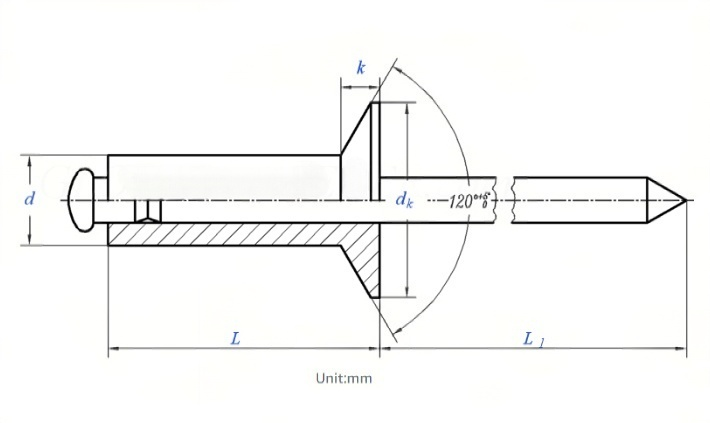

The 120° countersunk head embeds fully into the material, creating a smooth, flat surface that allows for seamless stacking and interference-free sliding of adjacent parts.
Eliminating surface protrusions minimizes aerodynamic drag and wind noise while preventing operator injuries from catching or external impact damage to the rivet head.
The wide head angle requires less countersinking depth, making it ideal for thin sheets while distributing clamping forces evenly to prevent hole deformation and tearing.
DIN 7337A has a dome head, while DIN 7337B features a 120° countersunk head for flush installation.
They provide a smooth surface finish, reduced protrusion, and reliable one-sided fastening.
Yes. A matching 120° countersunk hole is required for proper installation.
Yes. Size, material, finish, and packaging can be customized.