Dual Drive Design
Slotted recess provides a backup drive option for manual adjustment or removal in confined spaces.

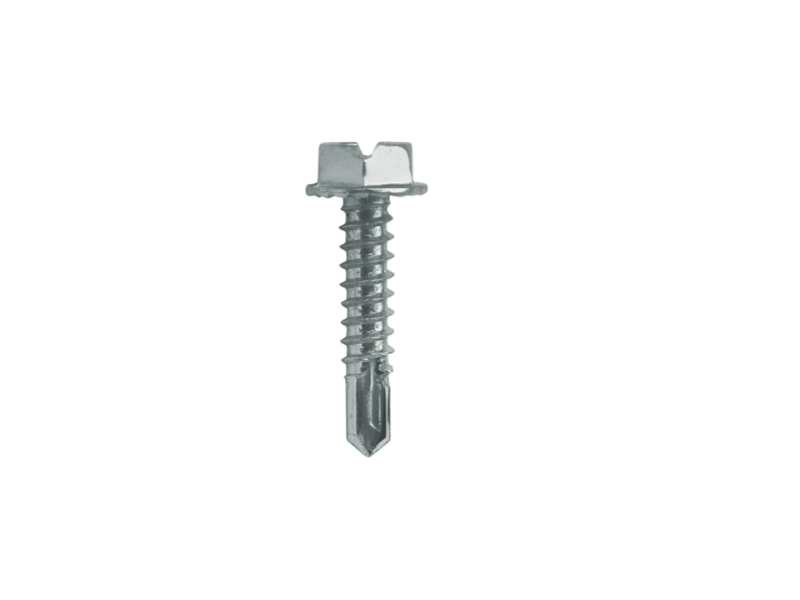
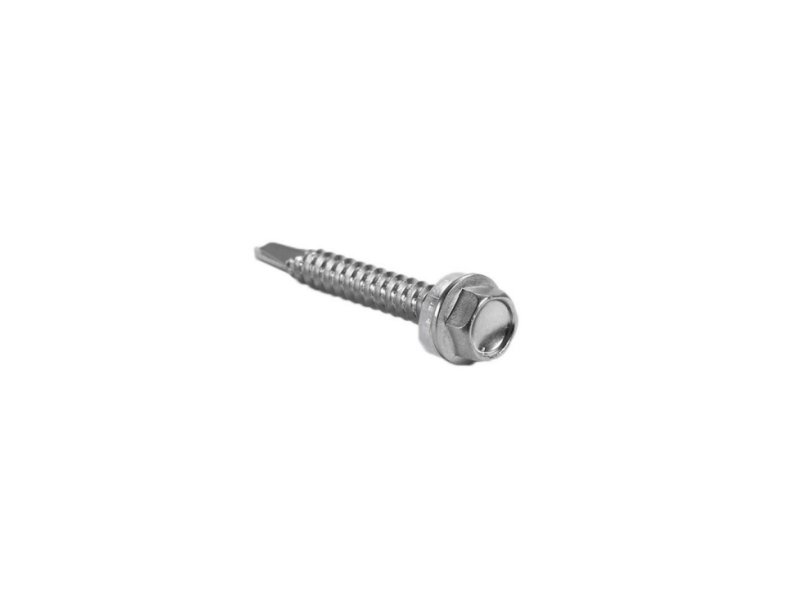
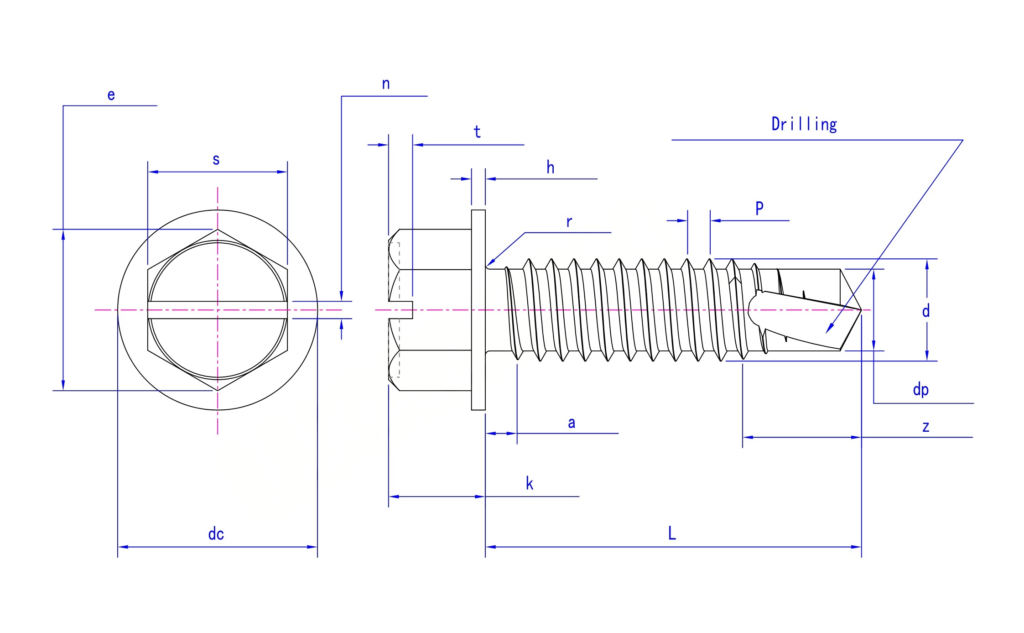
DIN 7504L refers to a self-drilling, self-tapping screw featuring a slotted hex washer head.
It is a less common variant within the DIN 7504 standard family, distinguished primarily by the addition of a single slot on the top of the hex head.
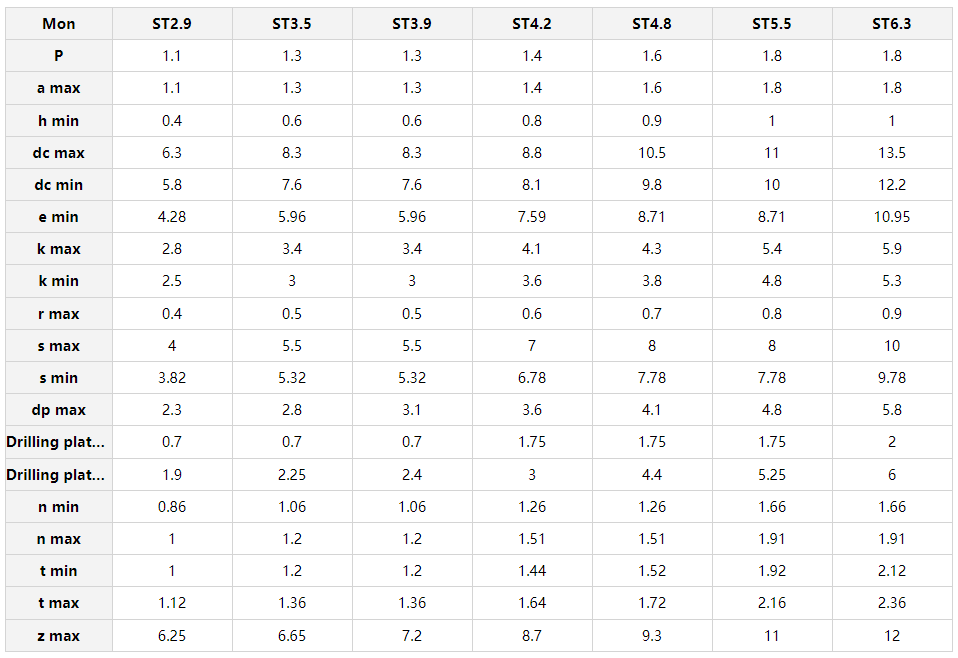
Common size ranges are primarily concentrated in the smaller diameter segment, such as ST 4.2 (corresponding to a socket wrench size of SW=7 mm) and ST 4.8 (corresponding to SW=8 mm).
With the widespread adoption of industrial power tools and pneumatic torque wrenches, the external hex design of the DIN 7504K delivers sufficient tightening torque with minimal risk of slippage, ensuring high efficiency.
In contrast, the “slotted” drive is prone to cam-out—where the tool slips out of the slot—under high torque, potentially damaging the screw head; consequently, the hex-head DIN 7504K has largely superseded the DIN 7504L in modern, high-intensity assembly line and roofing applications.
Today, the DIN 7504L is primarily used for applications requiring specific manual maintenance or for fastening electrical enclosures, equipment chassis, and certain automotive components.
Slotted recess provides a backup drive option for manual adjustment or removal in confined spaces.
Built-in washer face distributes load evenly and helps protect the fastening surface.
Can be supplied with pre-assembled Polyamide (PA) or EPDM washers for enhanced sealing and protection.
DIN 7504K uses a standard hex washer head, while DIN 7504L adds a slotted recess on the hex head, allowing both socket and flat-blade installation.
It is commonly used for steel sheets, light-gauge steel sections, aluminum profiles, and other thin metal assemblies.
Yes. For outdoor applications, stainless steel versions or screws fitted with EPDM sealing washers are recommended for improved corrosion resistance and weather protection.
The drill point must match the total thickness of the materials being joined. Using an undersized drill point may reduce drilling efficiency or cause installation failure.