High Tool Universality
The slotted drive allows installation and removal with a standard flathead screwdriver, offering a significant advantage for field maintenance or emergency repairs.

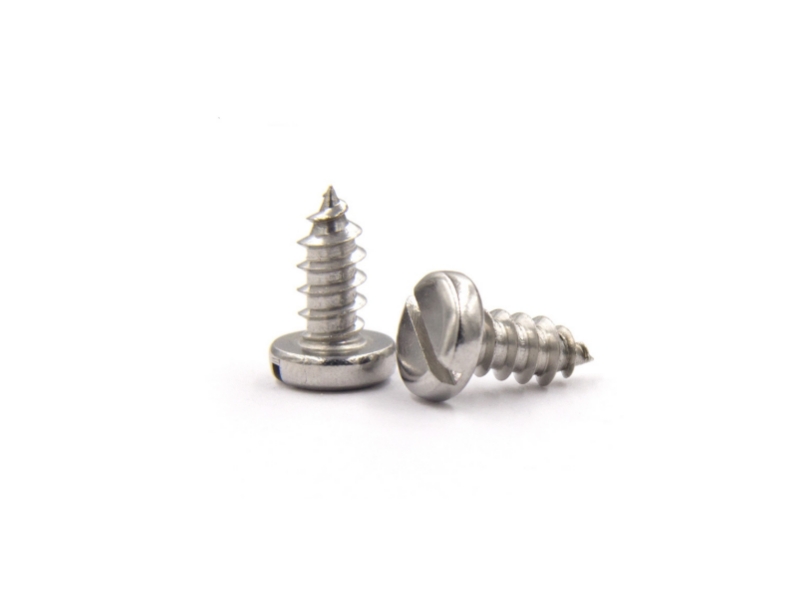
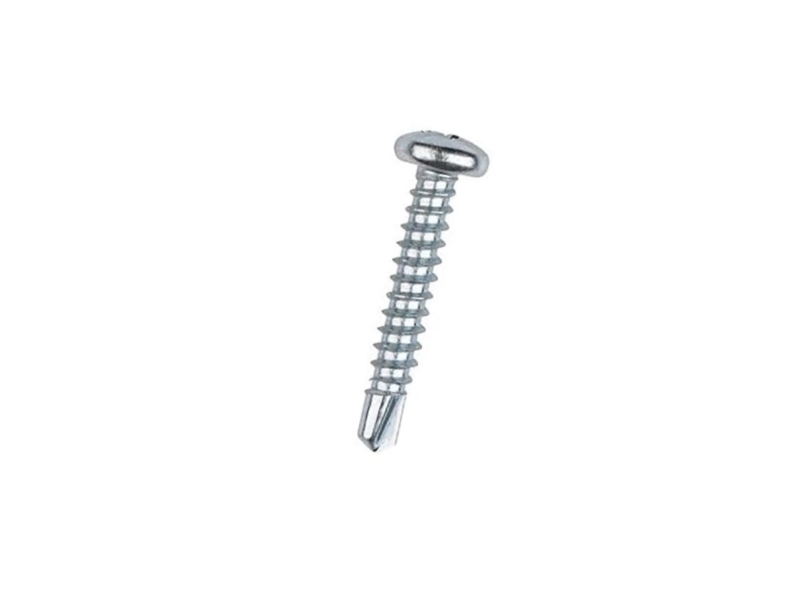
DIN 7971 is a slotted pan head self-tapping screw designed for fastening thin metal sheets, plastics, and other lightweight materials. During installation, it forms its own mating thread in a pre-drilled hole, eliminating the need for separate tapping operations and improving assembly efficiency.
The original DIN 7971 standard has been superseded by ISO 1481, although DIN 7971 remains widely referenced and supplied throughout the industry.
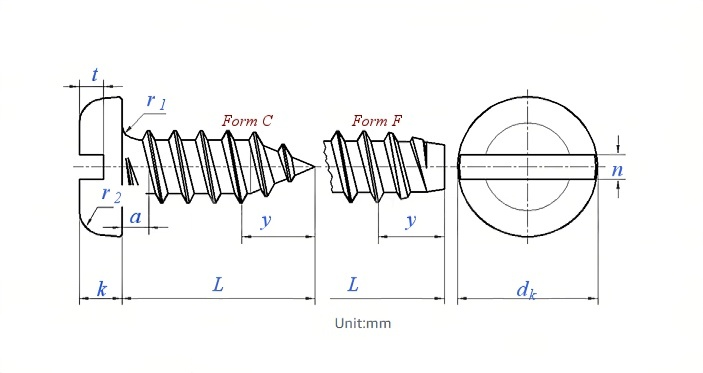
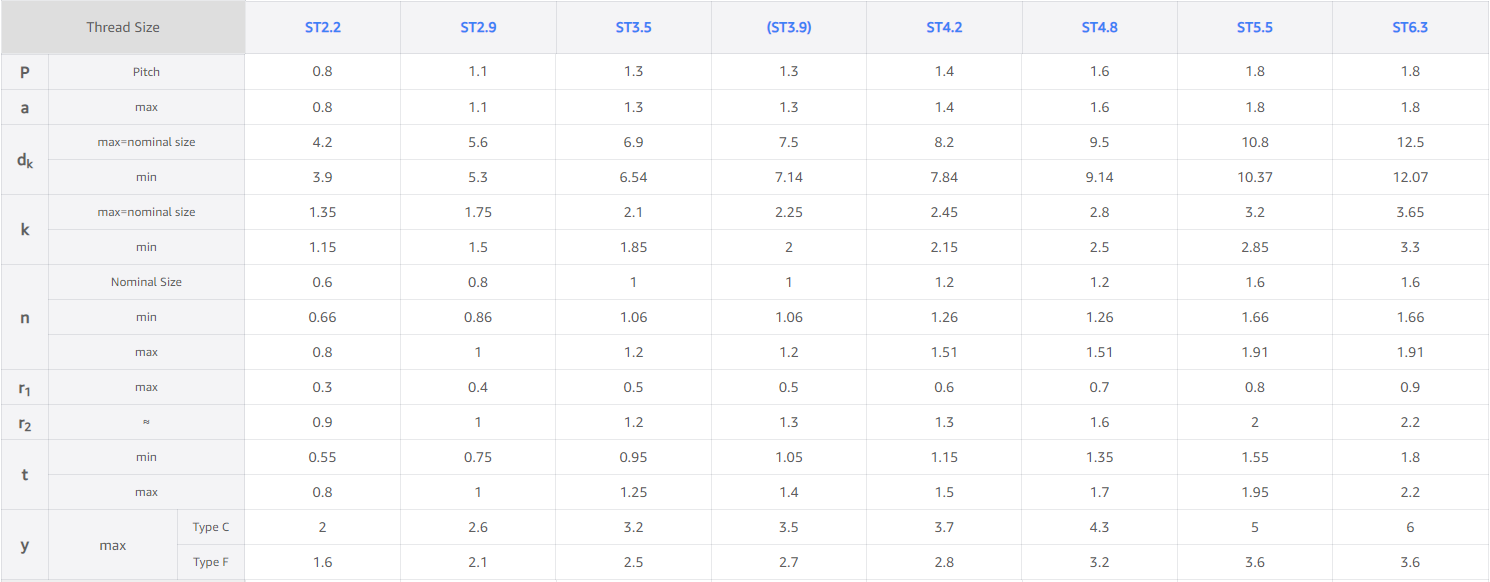
DIN 7971 specifies a screw designed to cut its own thread when driven into pre-drilled sheet metal, plastics, or soft materials.
Head Style: Pan Head (a low-profile, cylindrical head with a flat top and slightly rounded sides).
Drive Type: Slotted (flat head).
Thread Type: Type A (pointed tip) or Type B (blunt tip), featuring a spaced, coarse thread optimized for high stripping resistance in thin materials.
The slotted drive allows installation and removal with a standard flathead screwdriver, offering a significant advantage for field maintenance or emergency repairs.
The open-slot design prevents the accumulation of dust, oil, or paint, and its natural cam-out characteristic prevents over-tightening on thin sheets.
ISO 1481 is the modern international replacement for DIN 7971. They are functionally interchangeable, but ISO 1481 may have minor variations in head diameter (dk) and head height (k). Check exact dimensions if you have strict clearance tolerances.
Not recommended. Stainless steel work-hardens rapidly. Driving a stainless steel screw (A2/A4) into a stainless steel sheet often causes thread galling or head breakage. Use case-hardened carbon steel screws or thread-forming screws instead.
The hole diameter should generally be 70% to 85% of the screw's nominal diameter (e.g., 3.2mm–3.5mm for an ST 4.2 screw). Harder or thicker materials require larger pilot holes to prevent head breakage during installation.
Carbon Steel: Case-hardened, typically plated with zinc (clear/blue, yellow) or black oxide.
Stainless Steel: A2 (AISI 304) for general corrosion resistance; A4 (AISI 316) for marine and chemical environments.