Flush Finish
90° countersunk head ensures a perfectly flat, snag-free surface.

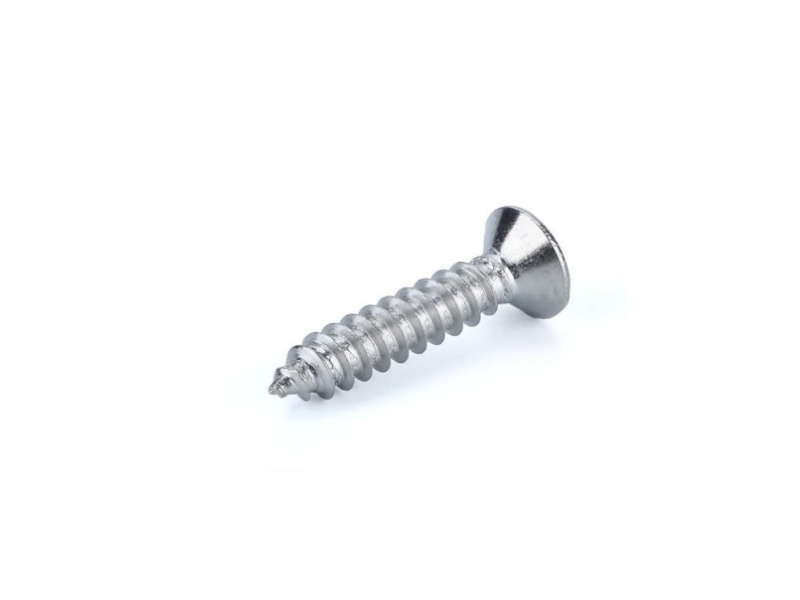
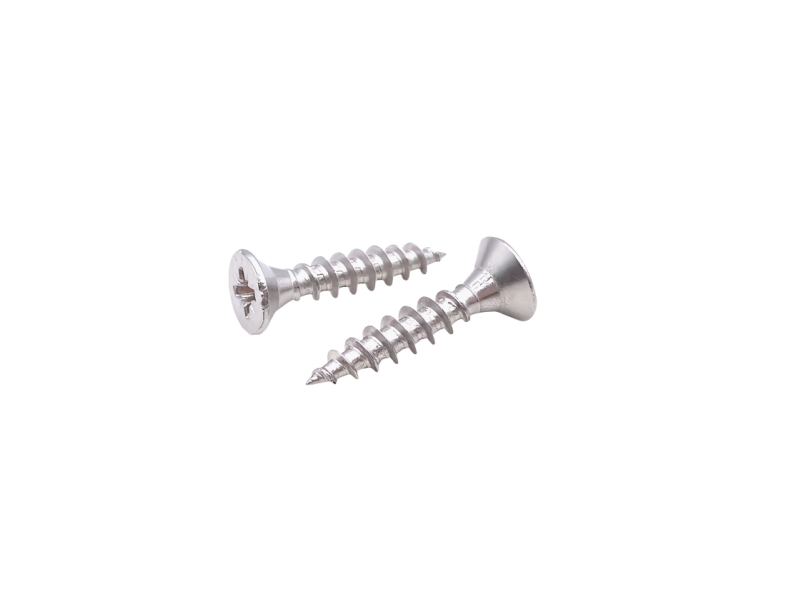
DIN 7982 is the standard for countersunk head tapping screws with cross recesses. Once tightened, the head of this screw is completely countersunk into the surface of the fastened component, ensuring a flush mounting surface. As a result, it is widely used in applications where a smooth, flush finish is required, such as furniture manufacturing, door and window installation, automotive interiors, and electronic enclosures.
Currently, this standard has been superseded by the international standard ISO 7050, but “DIN 7982” remains one of the most commonly used terms in the fastener market.
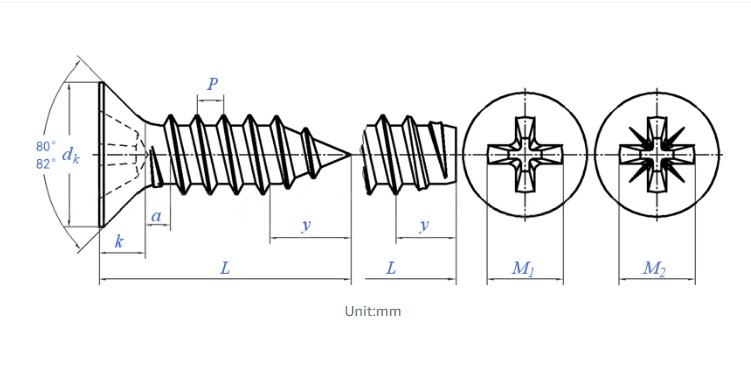
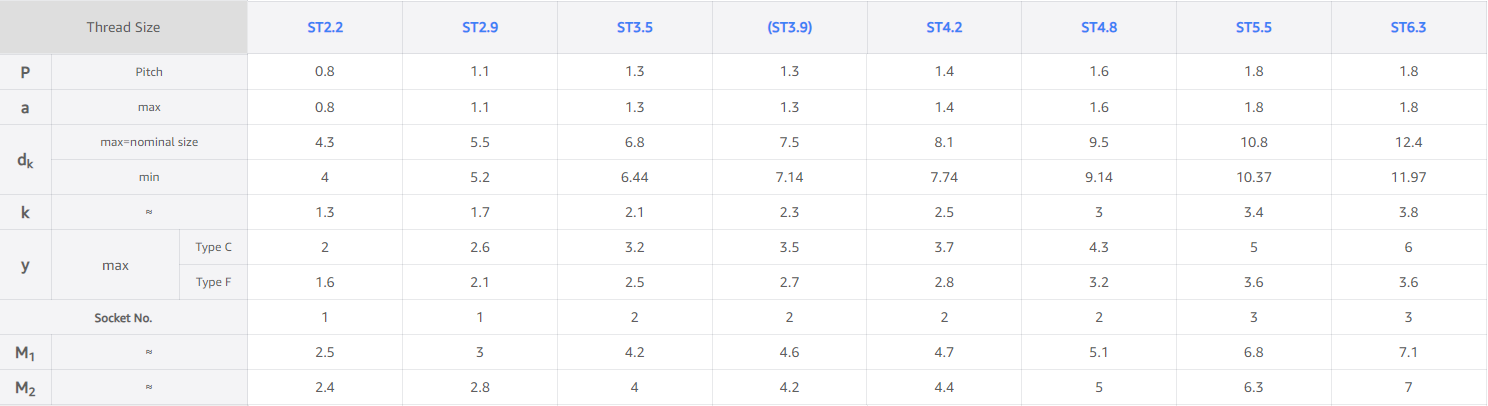
Head Style: Countersunk (Flat head). It sits completely flush with the surface of the material when fully installed, requiring a pre-countersunk hole.
Countersink Angle: Standard 90° taper.
Drive Types: Typically features a cross-recess, available in two primary formats:
Type H: Phillips (PH)
Type Z: Pozidriv (PZ)
Thread Type: Spaced, coarse self-tapping thread optimized for high stripping resistance in thin materials.
Point Style: * Form C: Sharp cone point (most common for piercing and alignment).
Form F: Flat, blunt point (used when clearance behind the substrate is limited).
90° countersunk head ensures a perfectly flat, snag-free surface.
Hardened threads cut mating threads instantly, eliminating pre-tapping.
No. Self-drilling screws form their own holes, whereas self-tapping screws (7982) require a pre-drilled pilot hole.
Minor head and recess dimension tweaks. ISO 7050 is international, but they are practically interchangeable.
Form C provides precise alignment/piercing. Form F suits shallow clearance where a protruding sharp point is hazardous.
Yes. The coarse pitch provides excellent engagement in rigid plastics (e.g., PVC) and plywood.