
When people talk about the Russia–Ukraine war, the conversation usually focuses on energy. Europe’s natural gas shortages, volatile oil prices, and the rapid push toward renewable energy have dominated headlines for months.
Yet beyond the energy debate, another shift is quietly taking place—one that receives far less attention but could have lasting consequences for global manufacturing.
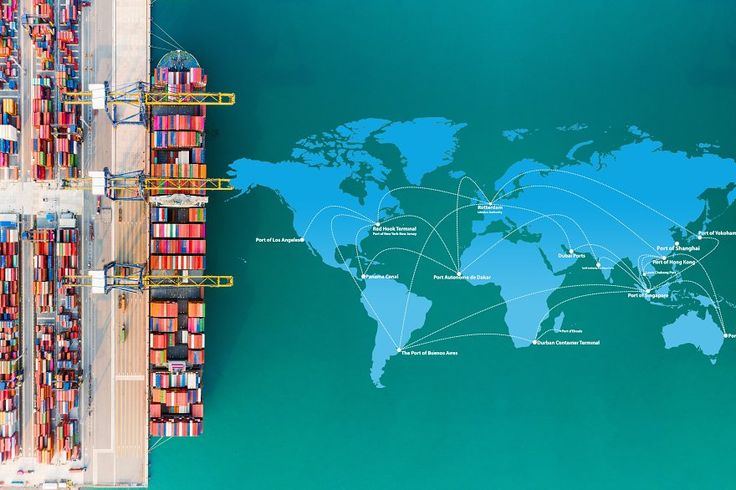
The global industrial supply chain is slowly changing direction.
For decades, the logic of manufacturing was relatively simple: production goes where costs are lower, and efficiency is higher. Components move across borders, often traveling through multiple countries before a finished product is assembled. This highly specialized system became one of the most stable pillars of globalization.
But geopolitical uncertainty is beginning to challenge that model.
Companies are gradually realizing that supply chain stability may be just as important as price. If a critical component cannot be delivered on time due to transportation disruptions, trade restrictions, or political tensions, even the most competitive purchasing cost becomes meaningless.
Interestingly, this shift often becomes visible in the smallest industrial products.
Take fasteners, for example. Bolts, nuts, and other fastening components appear almost everywhere in modern industry—from steel construction and heavy machinery to the rapidly expanding renewable energy sector. Their share of total project costs is usually minimal, yet they play a fundamental role in structural connections.
In solar power projects, for instance, stainless steel fasteners are widely used in solar mounting systems. A simple component, such as a double-thread hanger bolt used to secure rooftop mounting rails, might seem insignificant on a procurement list. However, if these basic components are unavailable or delayed, installation schedules can quickly be affected. For contractors managing large-scale projects, such disruptions are not uncommon.
As a result, many companies are becoming more cautious when selecting suppliers.
Beyond pricing, procurement teams increasingly look at production capacity, delivery reliability, and supply chain integration. The ability to maintain consistent manufacturing and stable export logistics has become an important competitive advantage.
In this context, Asia continues to play a significant role in global manufacturing. Eastern China, in particular, has developed dense industrial clusters for metal processing and precision manufacturing. These regions offer complete supply chains—from raw materials to machining and finishing—allowing manufacturers to maintain both efficiency and scale.
Some companies have specialized for years in producing stainless steel fasteners and industrial fastening components. Manufacturers such as Suzhou Bilateral, for example, primarily supply fastening solutions used in construction structures and solar mounting installations.
These businesses rarely appear in macroeconomic headlines, yet they remain an essential part of the global manufacturing ecosystem.
Looking ahead, the Russia–Ukraine conflict may not fundamentally overturn the structure of global industry overnight. However, it has already encouraged companies to reconsider an important question:
Is efficiency still the only priority?
Increasingly, factors such as supply chain security, regional manufacturing capabilities, and production stability are becoming part of the decision-making process.
These changes will likely unfold gradually rather than suddenly. They may not make dramatic headlines, but they will appear in quieter places—procurement strategies, supplier networks, and the countless industrial components that hold modern infrastructure together.
Sometimes, the impact of global events can be traced all the way down to something surprisingly small.
Sometimes, it comes down to a single bolt.