
Why “Almost The Same” is the Most Dangerous Phrase in Engineering
In the world of B2B fastener procurement, SUS316 is just the beginning of the conversation. The real risk lies in the Mechanical Properties Standard.
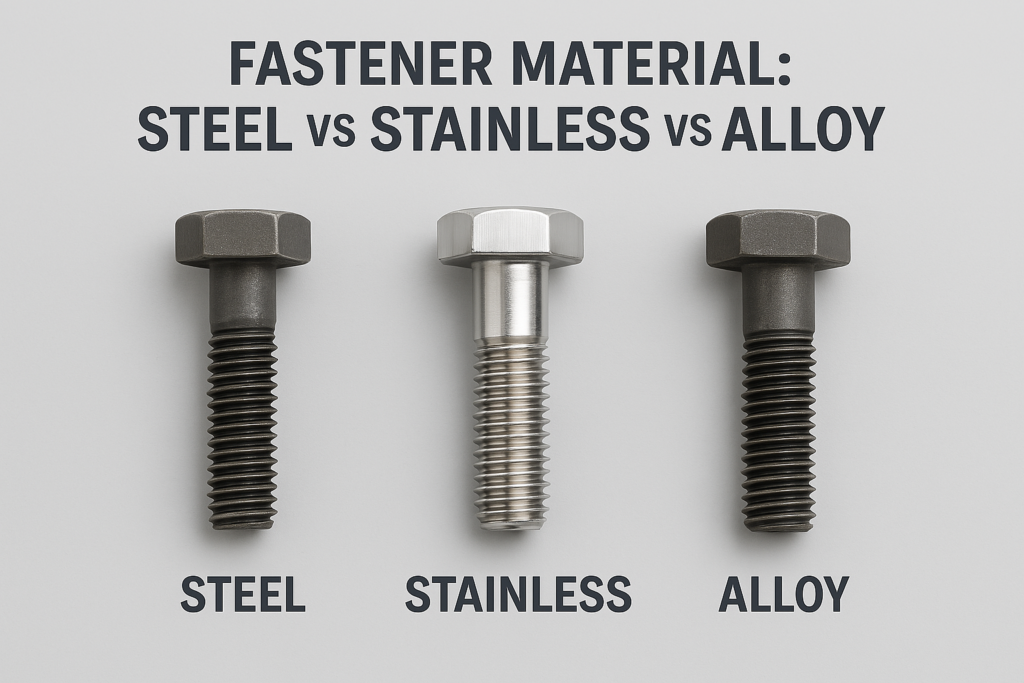
A common—and potentially catastrophic—mistake is treating ISO 3506-1 and ASTM A193 as synonymous simply because both often use 316-grade chemistry. While an A4-80 bolt and a B8M Class 2 bolt may look identical on a shelf, their metallurgical”pedigree” and failure points are worlds apart.
Technical Deep-Dive: ISO 3506 vs.ASTM A193
To move from a “buyer” to a “specifier”, you must understand the diverging logic of these two global standards.
| Technical Parameter | ISO 3506(International Standard) | ASTM A193(High-Pressure/Petrochemical) |
| Typical Grade Marks | A2-70,A4-80 | Grade B8(304),Grade B8M(316) |
| Manufacturing Logic | Cold-worked to achieve strength | Solution Treated(Class 1) or Strain Hardened(Class 2) |
| High-Temp Stability | Rated up to 300°C(General use) | Tested up to 537°C+(Pressure vessel grade) |
| Hardness Control | Basic limits(HB 183-290 for A4-80) | Mandatory Hardness Caps(To prevent SCC) |
| Impact Testing | Not mandatory unless specified | Mandatory for certain sub-grades |
| Regulatory Fit | General Construction, Marine, Food Tech | ASME Boiler&Pressure Vessel Code(BPVC) |
1. ISO 3506: The Efficiency Standard for Global OEM
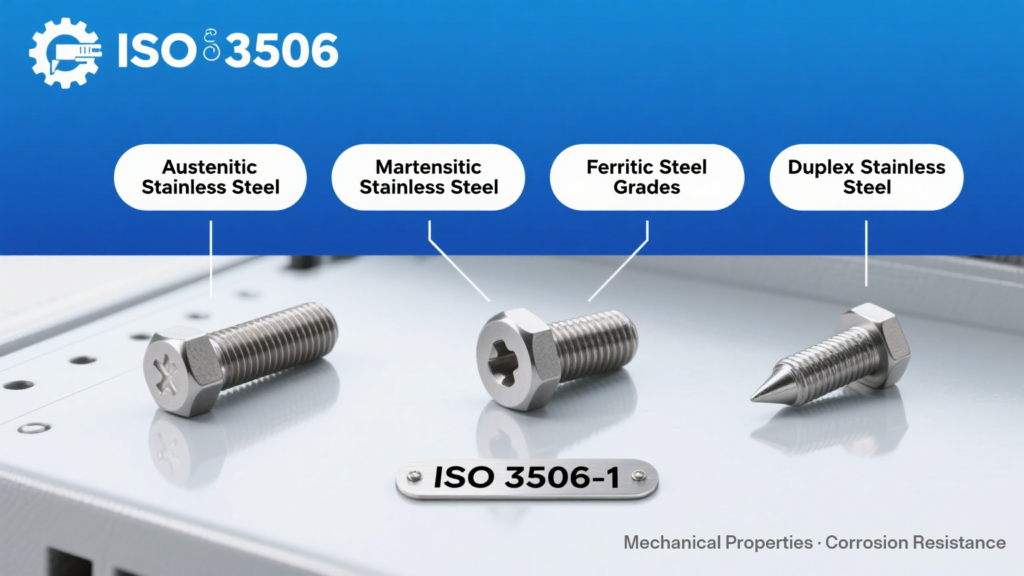
ISO 3506 (Metric) is built for high-volume, reliable industrial performance. When you specify A4-80, the standard guarantees a minimum tensile strength of 800 MPa through cold-working. It is the workhorse of the global supply chain, but lacks the documented thermal stability records required for nuclear or heavy chemical infrastructure.
2. ASTM A193: The Safety Standard for Volatile Environments
ASTM A193 (Inch or Metric) is a Safety Standard. It governs fasteners in environments where a leak means an explosion.
Class 1 (Solution Treated): The fasteners are annealed to maximize corrosion resistance, though at the cost of some strength.
Class 2 (Strain Hardened): These are the high-torque champions. They undergo a secondary drawing process that aligns the grain structure for extreme shear resistance.
The “Invisible” Risks: What Your MTR Isn’t Telling You
The Stress Corrosion Cracking(SCC) Threshold
One of the most significant differences is how these standards handle Hardness.
ASTM A193 places a strict ceiling on hardness for B8M bolts(often Max 35 HRC for Class 2). Why? Overly hard stainless steel becomes brittle and susceptible to Stress Corrosion Cracking.
ISO 3506 is more lenient. If you buy “budget” A4-80 bolts, they may meet the strength requirement but be so close to their brittle limit that they snap under sudden vibration or thermal cycling.
The 3.1 Certificate vs.The”Commercial” Invoice
In a B2B context, the paper is as important as the metal. An ASTM A193 bolt requires a full MTR (Material Test Report) showing the “Heat Treatment Lot”. Many ISO bolts are sold with “Batch Reports”, which lack the individual lot traceability required for high-risk insurance coverage.
Case Study: The Cost of a”Standard Swap”
A European engineering firm building a high-pressure filtration system for a chemical plant in Texas decided to use ISO 3506 A4-80 instead of the specified ASTM A193 B8M Class 2. On paper, both met the 800 MPa tensile requirement.
The Result: During the first thermal expansion cycle (fluctuating from 20°C to 250°C), the ISO bolts, which lacked the specific grain-size controls specified by ASTM, experienced differential thermal expansion failure. The resulting leak cost the contractor $45,000 in clean-up and $120,000 in liquidated damages.
Expert Verdict: If your system involves pressure or temperatures above 150°C, the “savings” of switching to ISO are a high-interest debt you will eventually pay back.
2026 Trends: CBAM and Material Integrity
1. Carbon Border Adjustment Mechanism (CBAM)
The EU is now taxing the”embedded carbon” in fasteners. High-quality ASTM mills in Japan, Taiwan, and the USA are often more energy-efficient than low-cost ISO manufacturers. In 2026, the price gap between “cheap” ISO and “premium” ASTM may shrink as carbon taxes are applied at the border.
2. The”Low-Nickel” Deception
With Nickel prices fluctuating, we see a rise in “200-series” or “D-grade” alloys being falsely stamped as A2 or A4.
Professional Tip: Always perform a Moly-Test or XRF analysis upon arrival. If your “A4” bolt doesn’t show at least 2% molybdenum, reject the entire shipment immediately.
The Master Selection Matrix
| Environment | Required Grade | Mandatory Standard | Why? |
| Marine/Coastal | 316(A4) | ISO 3506 | Excellent for static corrosion. |
| Steam/Power Gen | B8M | ASTM A193 | Resists creep at high temperatures. |
| Food Processing | 304(A2) | ISO 3506 | Maximum hygiene, lower pressure. |
| Offshore Oil/Gas | B8M Class 2 | ASTM A193 | Prevents SCC in high-vibration/salt. |
What is thread galling?
Engineering Peace of Mind
Selecting the right Material Standard is about more than just matching a grade; it’s about matching a risk profile.
Use ISO 3506 for architectural, construction, and general machinery where cost-efficiency is the driver.
Use ASTM A193 for energy, chemical, and pressure systems where failure is not an option.
Are your specifications current for 2026?
Need a technical torque chart for stainless applications?
Contact our engineering team at +86 13451555650 or sales@szbilateral.com.