
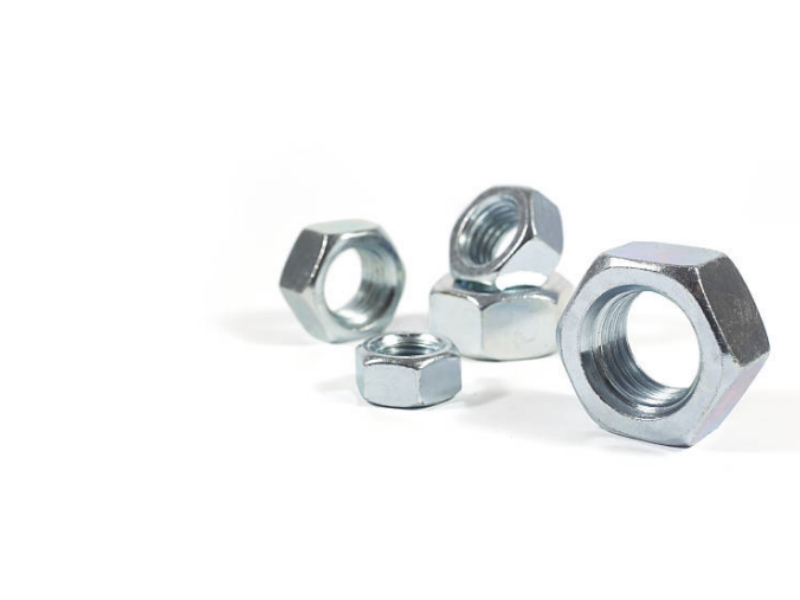
Introduction: Why Hex Nut Selection Goes Beyond Thread Matching
In industrial fastener procurement and engineering design, many professionals make the mistake of simply labeling a BOM with “M8 Hex Nut.” They operate under the false assumption that as long as the thread size matches, the assembly will hold.
However, in demanding B2B applications, improper hex nut selection directly undermines joint reliability, assembly line throughput, and long-term structural safety. Neglecting environmental stressors, load limits, and bolt compatibility can lead to severe issues like thread stripping, rotational loosening, or sudden joint failure—even if the nut initially screws on perfectly.
To achieve maximum fastening security, engineers and procurement specialists must evaluate three interconnected technical pillars:
Optimal Joint Integrity = Nut Type + Product Grade + Strength Class
Together, these variables govern a nut’s structural load capacity, manufacturing precision, and system-wide compatibility.
1. Hex Nut Types: How Height Influences Load Distribution and Spatial Limits
Differences in the structural height of hex nuts directly affect the thread engagement length and resistance to pull-out.
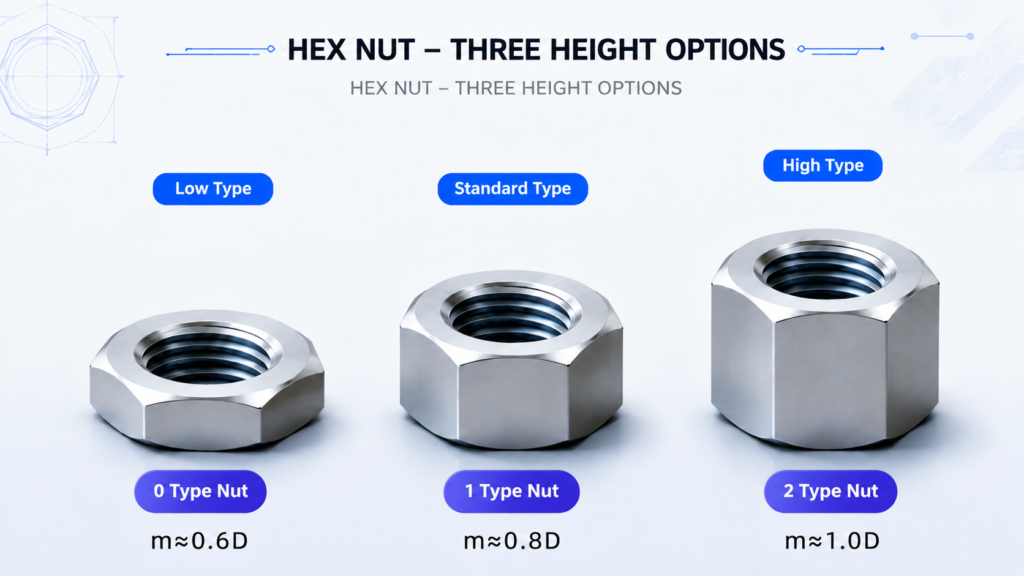
According to common standards, hex nuts are typically classified based on the ratio of their height (m) to their nominal diameter (D) as follows:
- Type 0 nuts (thin nuts)
- Type 1 nuts (standard nuts)
- Type 2 nuts (tall nuts)
There is no absolute superiority among these three types; the correct choice depends on the specific application.
Type 0 Hex Nuts: Compact Solutions for Restricted Spaces
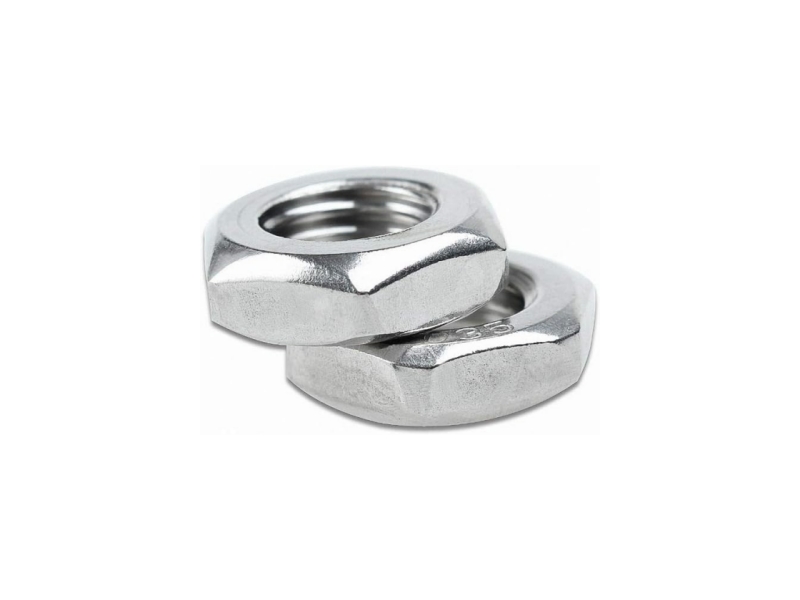
Also known as thin nuts, Type 0 hex nuts feature a reduced height profile (m ≈ 0.6D) designed specifically for low-clearance installations. Because the profile is physically compressed, the number of active shear-bearing threads is reduced. Consequently, these components exhibit:
- Lower tensile load capacity compared to standard nuts.
- Decreased resistance to thread shear under axial stress.
- Incompatibility with high-load structural joints.
Therefore, Type 0 nuts are strictly recommended for space-constrained positioning, auxiliary jam-nut locking systems, or light-duty retention applications.
Type 1 Hex Nuts: The Industrial Benchmark for General Machinery
Type 1 nuts (m ≈ 0.8D) represent the most widely used configuration across B2B sectors. They deliver an optimal equilibrium between structural integrity, material cost, and tooling versatility. By providing sufficient thread engagement and highly stable torque tension properties, they are the default choice for automated assembly lines, electrical enclosures, and general machinery manufacturing.
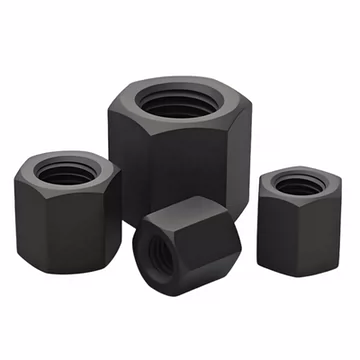
Type 2 Hex Nuts: High-Strength Profiles for Heavy-Duty Joints
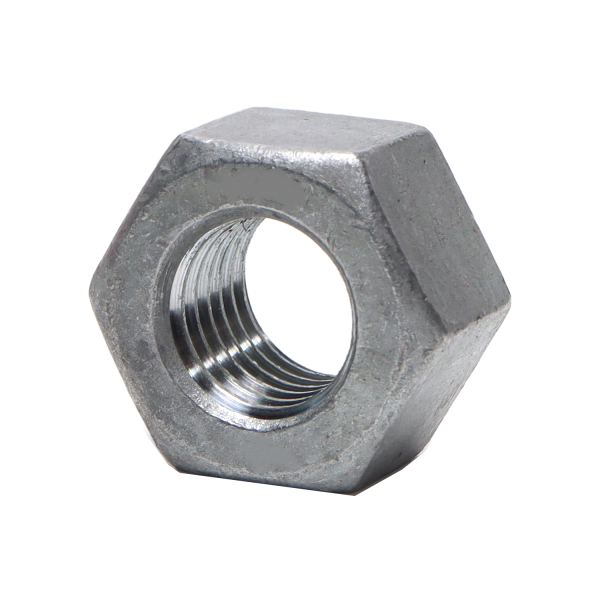
Type 2 hex nuts feature an extended height profile (m ≈ 1.0D), yielding a longer thread engagement zone. This extra material significantly enhances:
- Pull-out resistance under extreme axial tensile loads.
- Load-bearing capability along the internal thread flanks.
- Safety margins in high-fatigue or heavy-vibration applications.
As a result, Type 2 nuts are the engineering standard for heavy industrial machinery, high-pressure piping flanges, and critical structural steel connections.
2. Product Grades: The Key to Manufacturing Tolerances and Assembly Precision
While the structural type dictates load capacities, the Product Grade determines dimensional precision and seating consistency. In industrial fastener standards, hex nuts are classified into three primary grades:
Hex Nut Product Grade Comparison
| Product Grade | Technical Characteristics | Dimensional Tolerances | Typical B2B Applications |
| Grade A | Highest precision, minimal dimensional tolerances, premium surface finish. | Extremely tight | Robotic assembly lines, precision medical devices, and aerospace instruments. |
| Grade B | Balanced precision and production cost; versatile application envelope. | Medium | Standard industrial equipment, automotive powertrains, and agricultural machinery. |
| Grade C | Broadest manufacturing tolerances, highly cost-effective for bulk use. | Wide | Heavy structural steel frames, civil engineering, and general utility construction. |
The Operational Risks of Downgrading Product Grades
While minor dimensional deviations might go unnoticed during low-volume manual installation, they can cause catastrophic bottlenecks on automated production lines. Precision robotic equipment relies on Grade A or highly consistent Grade B fasteners to guarantee flawless magnetic pickup, socket alignment, and torque execution.
If a lower-tier Grade C nut is substituted to shave pennies off procurement, the system is exposed to:
- Thread interference and cross-threading errors.
- Erratic rotational friction during high-speed rundown.
- Torque control errors leading to premature tool shut-off.
- Insufficient pre-load target attainment, leaving the joint highly susceptible to vibrational loosening over time.
3. Structural Integrity: Matching Hex Nut Strength with Bolt Classes
A common, high-risk engineering mistake is focusing solely on bolt strength while treating the mating nut as a generic commodity. In a properly designed bolting system, the nut serves as the vital “safety valve.”
Under catastrophic overload conditions, the joint’s failure mode must be predictable:
Fastener Joint Failure Modes
| Failure Mechanism | Observability & Inspection | Repair & Maintenance Effort | Associated Risk Level |
| Bolt Tensile Fracture | Highly visible externally; immediate visual detection. | Straightforward bolt replacement. | Low (Highly manageable) |
| Internal Thread Stripping | Completely hidden; no outward physical distortion. | Complex disassembly or complete component scrap. | High (Sudden, catastrophic failure) |
To prevent sudden, undetectable thread shear, the hex nut’s proof load strength must always match or exceed the tensile strength rating of the mating bolt.
For example, when specifying high-strength systems:
- Class 8.8 structural bolts must be paired with Class 8 hex nuts.
- Class 10.9 high-tensile bolts demand Class 10 (or higher) hex nuts.
Skimping on nut grade to reduce upfront component costs creates a hidden failure point that jeopardizes the structural integrity of the entire machine.
4. Selection Methodologies: Engineering Analysis vs. Standardized Selection
Depending on your design phase and industry focus, there are two standard pathways to source the ideal fastener.
Method A: Deep Engineering Analysis
This method is vital for original equipment manufacturing (OEM), specialized heavy machinery development, or hazardous process environments. It involves calculating specific clamp load requirements, analyzing operating temperature fluctuations, measuring chemical exposure risk, and selecting unique material coatings (such as hot-dip galvanizing, zinc-nickel plating, or choosing marine-grade stainless steel like 316L).
Method B: Standardized Part Number Specification
For the majority of standard industrial assemblies, selecting fasteners by international standard designations is significantly faster and highly efficient. These standards serve as pre-packaged technical agreements that specify exact geometries, mechanical limits, tolerances, and thread fit classes.
Instead of writing complex technical specifications, a design engineer can simply specify:
“ISO 4032 M10 Class 8 Hex Nut”
Suppliers worldwide will immediately understand the precise dimensional, mechanical, and quality requirements, cutting out lengthy technical reviews.
5. Global Standard Comparison for Hex Nuts
To streamline your international sourcing and simplify bill of materials (BOM) creation, utilize the reference matrix below to compare regional and global hex nut standards:
Cross-Reference Directory of International Hex Nut Standards
| Standard Designation | Profile Type | Common Strength Classes | Recommended Industrial Applications |
| ISO 4032 | Hex Nut (Style 1) | Class 5, 8, 10, 12 | Globally accepted metric standard; general machinery, automotive, and structural joints. |
| DIN 934 | Hex Nut (Type 1) | Class 5, 8, 10 | Legacy European standard; widely used in European-designed plant equipment. |
| ASME B18.2.2 | Standard Hex Nut | Grade 2, 5, 8 | North American fractional (inch) standard; heavy machinery and manufacturing. |
| ASTM A563 | Heavy Hex Nut | Grade A, B, C, D, H | Heavy-duty structural steel framing, high-pressure piping, and bridge construction. |
| DIN 439 | Thin Hex Nut (Type 0) | Class 04, 05, 8 | Low-clearance positioning, light-duty linkages, and jam-nut lock configurations. |
| DIN 6330 | Thick Hex Nut (Type 2) | Class 8, 10 | Heavy fixture setups, frequent-clamping jigs, and high-tensile machinery. |
| GB/T 6170 | Hex Nut (Style 1) | Class 6, 8, 10 | Standard Chinese metric specification; extensively used in automated systems. |
| GB/T 6175 | Hex Nut (Style 2) | Class 10, 12 | High-load transport machinery, earthmoving equipment, and mining systems. |
| GB/T 41 | Grade C Hex Nut | Class 5 | Economical utility steel structures, secondary supports, and general agricultural equipment. |
Strategic Sourcing Tip: If your machinery or finished products are bound for export to European or North American markets, prioritize specifying ISO 4032, DIN 934, or ASME B18.2.2 compliant hardware to simplify downstream maintenance. For domestic engineering projects, GB/T 6170 and GB/T 6175 are the default standards.
Conclusion: Tailoring the Fastener to the Application
Ultimately, successful hex nut selection is not just a matter of checking thread compatibility. It requires a balanced engineering approach that evaluates installation clearances, tensile load distribution, dimensional precision grades, and perfect load-matching with the mating male thread.
For routine B2B applications, choosing standardized parts from established global specifications guarantees fast procurement and consistent manufacturing quality. However, when dealing with heavy cyclic loads or aggressive environmental corrosion, always perform a thorough evaluation of material grades, plating options, and mechanical properties.
Keep in mind: there is no universally “perfect” hex nut—only the engineered nut perfectly suited for your specific application environment.
FAQ
Q1: What is the most critical factor to consider when selecting a hex nut?
The main reason is finding the correct balance between the nut height type, its strength class, and your specific joint operating conditions. Simply verifying the thread size is insufficient; you must ensure the nut’s proof load rating matches the yield strength of the mating bolt to prevent catastrophic failure under load.
Q2: What is the structural difference between Type 1 and Type 2 hex nuts?
The primary difference lies in their total height and corresponding thread engagement length. Type 2 hex nuts are physically taller (m ≈1.0D) than standard Type 1 nuts (m ≈ 0.8D), giving them more internal thread surface area to handle higher tensile loads without stripping.
Q3: Why is it vital to match the strength class of the nut to the bolt?
Matching the classes prevents hidden joint failures, such as internal thread stripping. In an over-torque or overload situation, you want the bolt to break in a visible manner rather than having the internal nut threads strip silently, which leaves a compromised joint looking perfectly intact from the outside.
Q4: How do I choose between Grade A, Grade B, and Grade C hex nuts?
Your selection should be based on your assembly method and required tolerance precision. Grade A offers the tightest tolerances and is ideal for automated robotic assembly. Grade B is the standard choice for general industrial machinery, while Grade C is best suited for coarse-tolerance structures like heavy construction framing.
Q5: Are stainless steel hex nuts suitable for harsh outdoor environments?
Yes, but you must select the correct material grade based on environmental corrosiveness. While standard SUS304 (A2) stainless steel provides excellent corrosion resistance in typical outdoor weather, highly corrosive marine environments or chemical processing zones require marine-grade SUS316 (A4) to prevent premature material degradation.
Conclusion: Engineering the Perfect Joint
Ultimately, successful industrial assembly relies on selecting components engineered for your specific operating environment. There is no single “perfect” hex nut; instead, the right choice depends on achieving a precise balance between nut height, dimensional tolerances, and strength class compatibility. While standardized global specifications like ISO 4032 or DIN 934 streamline B2B sourcing and guarantee baseline quality, highly demanding applications with extreme vibrations or corrosive conditions require a deeper material and mechanical analysis. By shifting from simple thread-matching to an integrated engineering approach, industrial procurement teams and design engineers can significantly reduce structural risks, eliminate downtime on automated assembly lines, and ensure long-term mechanical integrity.
Call to Action (CTA)
Struggling to match the right hex nut standard, material grade, or strength class for your next engineering project? Contact our industrial application engineers today. Our technical support team is ready to help you optimize your bill of materials, ensure strict compliance with global standards, and provide competitive pricing.
We offer comprehensive B2B services, including:
- Professional Fastener Selection & Engineering Support
- OEM/ODM Custom Manufacturing & Special Plating
- Technical Material Analysis & Standard Cross-Referencing
- Rapid Quotations & Global Logistics Support
[Request a Technical Consultation & Free Fastener Quote]