
The Invisible Battery: Why Your Choice of Bolt Could Destroy Your Frame
In engineering, we often mix materials to balance weight and cost. We use Aluminum for lightness, Carbon Steel for strength, and Stainless Steel Fasteners for longevity.
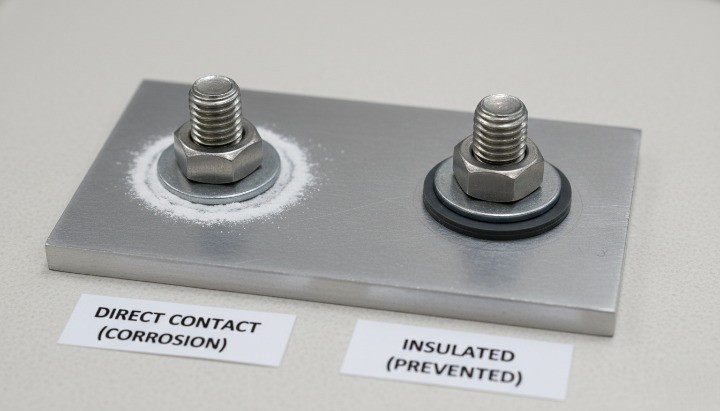
But there is a hidden danger. When you join these metals, you aren’t just building a structure; you are building a battery.
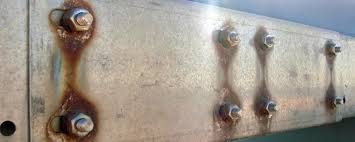
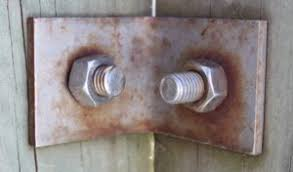
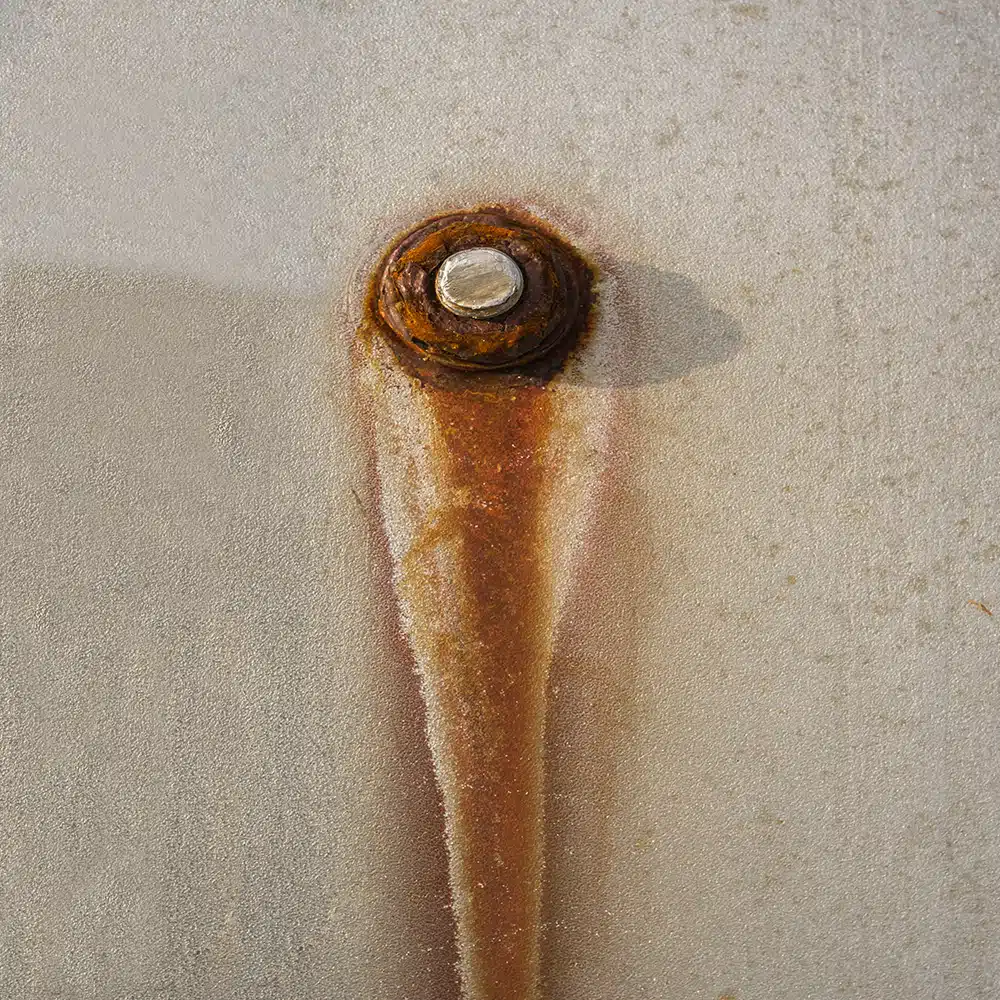
If moisture enters the mix, a chemical reaction starts. The more “active” metal (Aluminum or Carbon Steel) begins to dissolve to protect the “noble” metal (SUS304 or SUS316). This is Galvanic Corrosion. It is the number one cause of structural failure in coastal solar farms and industrial curtain walls.
Why “Stainless” Doesn’t Mean”Safe”
Many procurement managers believe that using a 316 stainless bolt solves all rust problems. This is a myth.
While the bolt itself won’t rust, its presence acts as a catalyst. It accelerates the total destruction of the aluminum or steel plate it is holding. If you don’t manage the voltage gap between these metals, your “stainless” solution will cause a massive structural failure.
Technical Deep-Dive: The Voltage Gap
To prevent failure, you must understand the”Anodic Index”. The further apart two metals are on this list, the faster the corrosion.
Galvanic Compatibility Matrix (Sea Water Environment)
| Metal Combination | Potential Difference(V) | Risk Level | Industry Recommendation |
| SUS316+SUS304 | <0.05V | Negligible | Safe for most environments. |
| SUS304+Carbon Steel | ~0.55V | High | Requires heavy coating or zinc protection. |
| SUS316+Aluminum (6000 Series) | ~0.65V | Critical | Mandatory isolation required. |
| SUS304+Magnesium | >1.00V | Extreme | Immediate failure without specialized barriers. |
The Surface Area Rule
A small stainless steel screw in a massive aluminum plate corrodes slowly. But using an aluminum rivet on a massive stainless steel tank? That rivet will snap in weeks. Always ensure the Anode (the part that corrodes) is much larger than the Cathode (the fastener).
Real-World Experience: The Solar Array Collapse
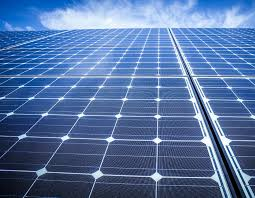
In 2023, a utility-scale solar project in a humid region used SUS304 bolts to secure aluminum mounting rails. To save on labor, they skipped the nylon isolation washers.
The Result: Within two years, the bolt holes in the aluminum rails had “flowered”. The metal turned into a white, brittle powder (aluminum hydroxide). During a minor wind event, the fasteners pulled straight through the weakened holes.
The Cost: The rework cost was 7x the original fastener budget.
The Lesson: A $0.05 washer would have saved a $2 million array. You may also read our guide on material standards compared. It can help you pick the right alloy grade before installation.
How to Prevent Galvanic Corrosion: 4 Actionable Strategies
1. Electrical Isolation (The Gold Standard)
If electrons can’t flow, corrosion can’t happen.
Use Nylon or PTFE washers and bush sleeves.
Ensure there is no metal-to-metal contact between the bolt head, the shank, and the aluminum plate.
2. Barrier Coatings
If you cannot use washers, use coated fasteners.
Zinc-Flake (Dacromet/Geomet): The zinc acts as a “buffer” layer.
Ceramic or PTFE Coatings: These provide a high-resistance physical barrier that prevents moisture from completing the circuit.
3. Joint Sealing
Stop the electrolyte (water) from entering the joint.
Apply heavy-duty Anti-seize compounds or marine-grade sealants during assembly.
If the joint stays dry, the”battery” never turns on.
4. Sacrificial Protection
If you must connect stainless to carbon steel, ensure the steel is heavily Hot-Dip Galvanized. The zinc on the steel will sacrifice itself to protect both the steel and the stainless connection.
2026 Industry Trend: The “Green” Corrosion Challenge
As the industry moves toward CBAM(Carbon Border Adjustment Mechanism) compliance, we are seeing a shift in material choices.
Low-Carbon Aluminum is becoming popular in green buildings. However, some recycled aluminum alloys have higher impurity levels, which can actually increase their galvanic sensitivity.
When sourcing fasteners for “Green Steel” or “Green Aluminum” projects, demand a full 3.1 Material Test Report (MTR). Ensure the alloy’s copper content in aluminum is low, as copper significantly accelerates galvanic reactions with stainless steel.
Procurement Checklist: Avoiding the Corrosion Trap
Before you sign off on your next B2B bulk order, ask your supplier these three questions:
Is there an isolation spec?
If we are using SUS316 with Aluminum, are washers included in the BOM(Bill of Materials)?
What is the environment class?
For C4 or C5 (Coastal/Industrial) environments, standard 304 is insufficient; you need 316 plus a barrier coating.
Are we using high-torque tools?
Over-tightening can crush isolation washers. You should review our guide on preventing thread galling to ensure your torque settings don’t destroy your corrosion protection.
Conclusion: Engineering for the Long Haul
Galvanic Corrosion is not a matter of “if”, but “when”. In a B2B environment, your reputation is built on the longevity of your structures. By understanding the voltage gap, you can lower the risk in mixed-metal assemblies.
You can do this by using simple isolation methods. You can also use coating methods.
Need a custom compatibility audit for your next project?
Contact our metallurgical team for a project-specific risk assessment: +86 13451555650 or sales@szbilateral.com.