Flush Surface
90° countersunk head sits perfectly flat, eliminating protrusion risks and ensuring a sleek finish.

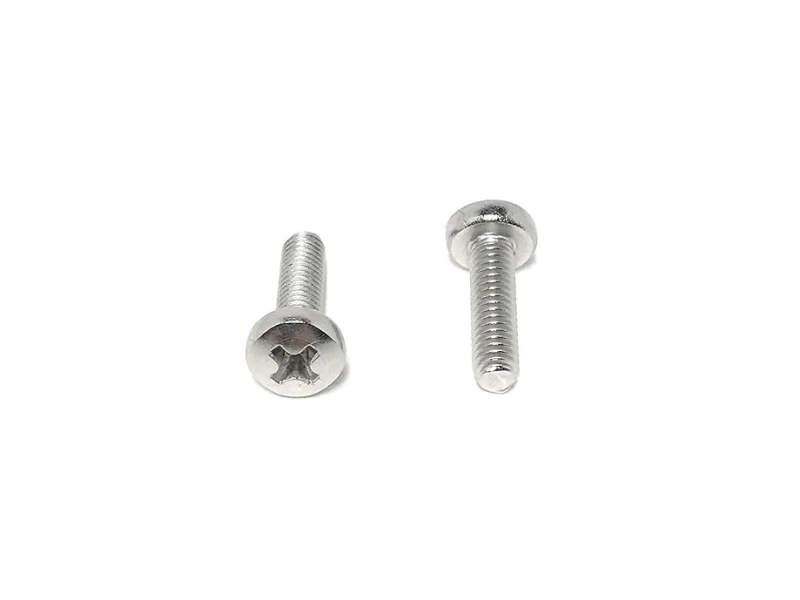
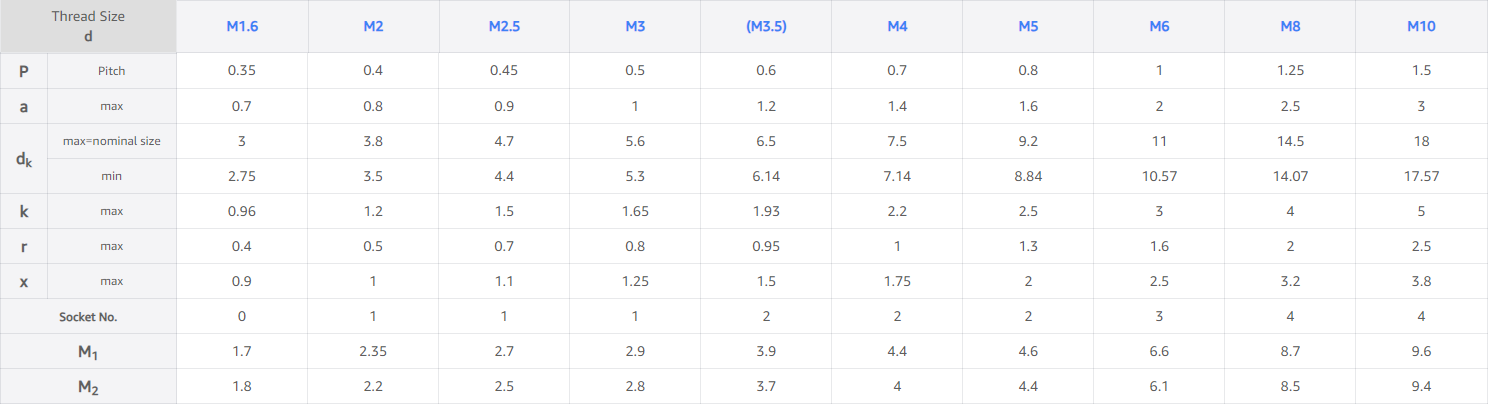
DIN 965 is a standard for cross-recessed countersunk-head machine screws with a 90° flat countersunk head and metric threads. It is designed to sit flush with the workpiece after installation and is widely used in machinery, electrical equipment, sheet metal assemblies, furniture, and industrial equipment.
DIN 965 includes both Phillips (H) and Pozidriv (Z) recess types and has largely been replaced by ISO 7046, although DIN 965 remains widely available in the market.
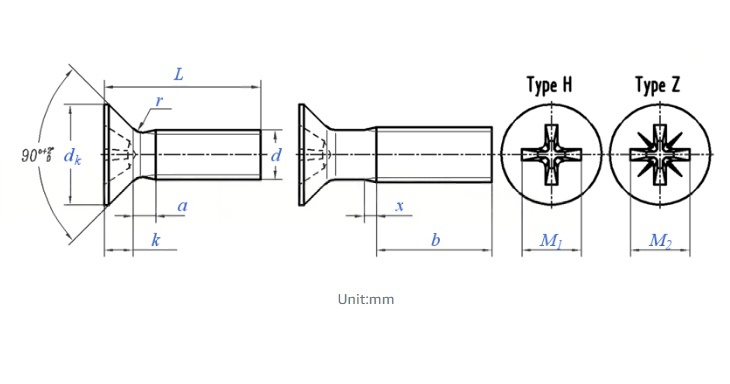
Head Style: Flat / Countersunk (90° profile)
Drive Types: Most commonly Phillips (Type H), though Pozidriv (Type Z) and Torx/Hexalobular (under newer ISO updates) are also available.
Measurement Convention: Unlike pan-head or hex screws, the nominal length ($L$) of a DIN 965 screw includes the full height of the head, measured from the flat top surface to the very end of the thread tip.
While DIN 965 remains widely used in supply chains and legacy engineering drawings, it has been officially superseded by ISO 7046. For the majority of standard commercial applications, they are interchangeable, but there are subtle dimensional variations in head diameter (dk) and head height (k) tolerances across larger thread sizes.
90° countersunk head sits perfectly flat, eliminating protrusion risks and ensuring a sleek finish.
Self-centering Phillips drive enables rapid tool alignment for manual or automated assembly.
ISO 7046 supersedes DIN 965, with slight dimensional and tolerance differences.
Control installation speed and apply anti-seize lubricants.
If plate thickness is less than head height ($k$), the countersink punches through, failing clamping.
Electronics enclosures, machinery panels, and flush-surface B2B assemblies.