
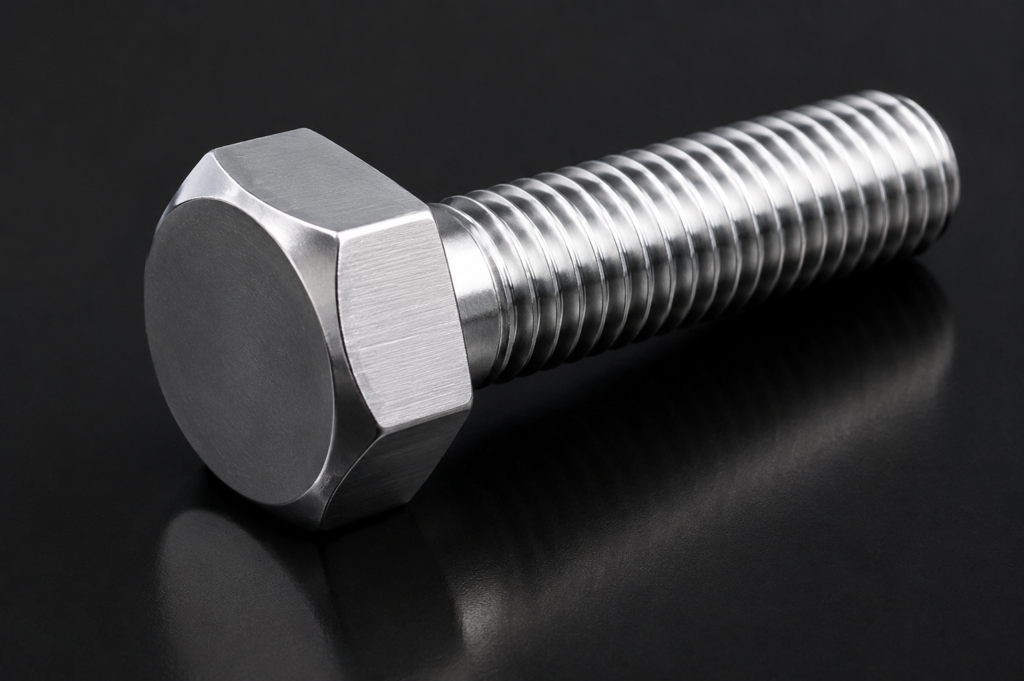
When purchasing fasteners or reviewing drawings, you’ll often see grades A, B, and C listed next to bolts and nuts. Many people confuse these with performance grades, which has led to quite a few misunderstandings. Today, we’ll discuss the “product grades” of fasteners.
I. Core Myth: Product Grade ≠ Quality Level
A common misconception in procurement is that “Grade A” implies “better quality.” This is incorrect.
Product grades are classifications based on manufacturing precision (tolerances) and surface roughness. They are designed to meet specific engineering requirements. As long as a fastener meets its designated standard and drawing specifications, whether it is Grade A, B, or C, it is a reliable and qualified product.
II. Technical Comparison: A, B, and C Grades
According to ISO 4759-1, fastener grades are primarily distinguished by dimensional tolerances and surface finish.
| Feature | Product Grade A | Product Grade B | Product Grade C |
|---|---|---|---|
| Manufacturing | Fine (Grinding or Precision Cold Heading) | Medium Processing | Rough Processing |
| Precision Level | Highest (Minimal Tolerances) | Medium | Lowest (Larger Tolerances) |
| Surface Finish (Ra) | 3.2μm – 6.3μm | 12.5μm | 25μm |
| Size Range | Typically for d ≤ 24mm | Typically for d > 24mm | Unlimited (Usually larger) |
| Fit / Clearance | Tight, for precision fits | Medium clearance | Large clearance |
Grade A: The Soul of Precision Machinery
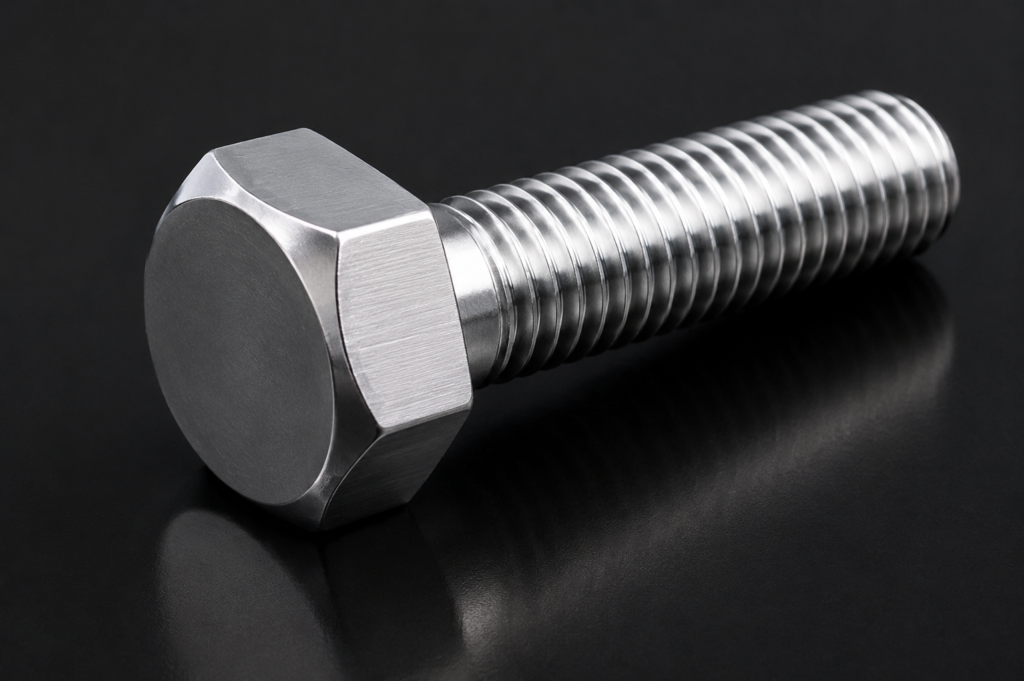
Grade A fasteners are finely crafted with exact dimensions. They represent the highest tier of precision and are used in critical components. High precision implies higher manufacturing costs; therefore, Grade A parts are typically more expensive than Grades B and C.
Advantages: The tight fit between the bolt shank and the hole prevents shear failure caused by excessive clearance.
Application Scenarios: Precision mechanical parts, household appliances (e.g., refrigerator compressors, washing machine motors), automotive engines, machine tools, and high-pressure sealing components (e.g., hydraulic blocks). They are also essential for aerospace, high-precision gearboxes, robotics, and power systems subject to frequent vibration.
Characteristics: The surface is smooth to the touch with no burrs or rolling marks. The fit is snug during installation with almost zero “wobble.” They remain stable even after repeated disassembly and reassembly.
Grade B: The Backbone of Industrial Manufacturing
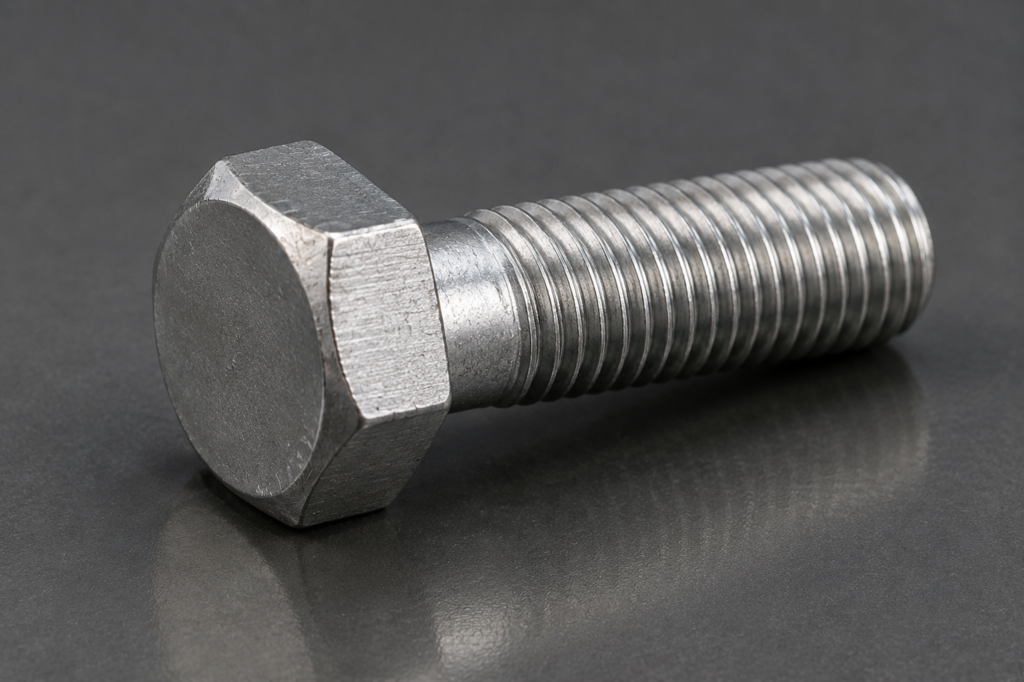
Grade B fasteners offer a high performance-to-price ratio and are the most widely used in the industrial sector. They balance accuracy with cost, making them the standard choice for most non-core yet stable load-bearing scenarios.
- Application Scenarios: Furniture (wardrobes, sofas), construction machinery (excavators, cranes), molds, automotive chassis, and significant steel structure connections.
- Characteristics: The finish is slightly rougher than Grade A but significantly better than Grade C. There is a moderate amount of clearance during installation.
- Advantages: Lower cost than Grade A, yet sufficient precision for the vast majority of industrial-grade installations.
Grade C: The Standard for Heavy Infrastructure
Often called “Black Bolts” or “Rough Bolts,” Grade C fasteners are known for being durable and inexpensive. They focus on low cost and ease of installation, typically used in temporary or secondary structures.
- Application Scenarios: Temporary site fixtures (scaffolding, precast assembly), non-load-bearing parts of factories, basic furniture, and auxiliary mechanical parts. They are also standard for agricultural machinery and mining equipment.
- Characteristics: The surface is rough, often with visible rolling textures and minor burrs. Dimensional errors are larger, meaning the matching holes are usually drilled slightly oversized to accommodate the bolt.
- Advantages: Very low price and high installation tolerance; they can be successfully installed even if the hole alignment is slightly off.
III. Conclusion: Don’t Choose the Most Expensive, Choose the Most Suitable
Using Grade A fasteners for low-precision tasks like scaffolding only adds unnecessary costs. Conversely, using Grade C for precision equipment or critical load-bearing parts introduces significant safety risks.
In fastener procurement, the goal is “Fitness for Purpose” rather than “The Highest Grade.” Choosing based on the actual application scenario and precision requirements is the most efficient and cost-effective strategy.