
What Is Q235 Steel?
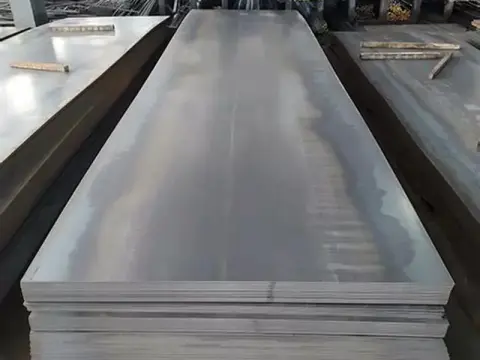
Q235 is one of the most widely used carbon structural steels in China.
- “Q” stands for yield strength
- “235” means the minimum yield strength is 235 MPa
Based on chemical composition and performance requirements, Q235 steel is divided into four grades:
Q235A, Q235B, Q235C, and Q235D
Q235 steel offers:
- Good ductility and toughness
- Excellent weldability
- Strong cold-forming performance
It is commonly used in:
- Steel structures
- Construction components
- Machinery parts
- Fasteners such as bolts, nuts, and pins
However, different grades are not interchangeable. Each grade is designed for specific working conditions.
Key Differences Between Q235 Grades
1. Chemical Composition (Impurity Control)
| Element | Q235A | Q235B | Q235C | Q235D |
|---|---|---|---|---|
| C | ≤0.22% | ≤0.20% | ≤0.17% | ≤0.17% |
| Si | ≤0.35% | ≤0.35% | ≤0.35% | ≤0.35% |
| Mn | ≤1.40% | ≤1.40% | ≤1.40% | ≤1.40% |
| P | ≤0.045% | ≤0.045% | ≤0.040% | ≤0.035% |
| S | ≤0.050% | ≤0.045% | ≤0.040% | ≤0.035% |
Insight:
From A to D, impurity levels (especially sulfur and phosphorus) decrease, resulting in cleaner steel and better performance.
2. Impact Toughness and Test Temperature
| Grade | Impact Test Requirement |
|---|---|
| Q235A | No impact test required |
| Q235B | ≥27J at 20°C |
| Q235C | ≥27J at 0°C |
| Q235D | ≥27J at -20°C |
Insight:
Higher grades provide better performance in low-temperature environments.
3. Deoxidation Method (Manufacturing Quality)
| Grade | Deoxidation Method |
|---|---|
| Q235A | Rimmed (F) or Killed (Z) steel |
| Q235B | Rimmed (F) or Killed (Z) steel |
| Q235C | Killed steel (Z) |
| Q235D | Special killed steel (TZ) |
Insight:
From A to D, metallurgical quality improves, resulting in a more uniform structure and higher reliability.
How to Choose the Right Q235 Grade
Instead of choosing the highest grade, selection should be based on actual working conditions.
1. Working Temperature
- Room temperature: Q235A or Q235B
- Around 0°C: Q235C
- Low temperature (-20°C): Q235D
2. Load Type
- Static or low stress: A / B
- Dynamic or impact load: C / D
3. Welding Requirements
- General welding: Q235B is sufficient
- Critical welded structures: Q235C or Q235D recommended
Lower impurity levels mean better weldability and reduced risk of cracking.
Typical Applications of Each Grade
Q235A – Basic Grade
Best for:
Non-critical structures under static load at room temperature.
Applications:
- Embedded parts in construction
- Non-load-bearing mechanical components
- Agricultural equipment frames
- Low-requirement welded parts
Not suitable for low temperature or impact load conditions.
Q235B – General-Purpose Grade
Best for:
Structures under moderate load at normal temperatures.
Applications:
- Building structures (purlins, beams, handrails)
- Bridge secondary components
- Machinery frames and supports
- Low-pressure tanks and containers
- Standard welded components
Q235C – Improved Toughness Grade
Best for:
Cold environments (~0°C) with moderate dynamic loads.
Applications:
- Structural components in cold regions
- Medium-sized bridge load-bearing parts
- Pipelines and auxiliary boiler components
- Construction machinery (crane arms, chassis)
Q235D – Low-Temperature Grade
Best for:
Low temperature (-20°C) and high-impact applications.
Applications:
- Heavy-duty steel structures in cold regions
- Low-temperature storage tanks
- Mining equipment and heavy trucks
- Critical welded structures
Advantage:
Low sulfur and phosphorus content improves weld integrity and reduces cracking risk.
Final Thoughts: The Right Choice Saves More Than Cost
There is no “best” grade of Q235 steel—only the most suitable one.
- Choosing a lower grade than required → Safety risk
- Choosing a higher grade than needed → Unnecessary cost
The key is to:
Select the lowest grade that fully meets performance requirements.