
The Hidden Cost of Zero Quality Control: Why Fasteners”Die” Prematurely
In high-stakes environments—such as offshore oil rigs, suspension bridges, or aerospace assemblies—a single fastener’s value far exceeds its weight in steel. In 2026, the global supply chain is increasingly crowded with”look-alike” products that satisfy dimensional specs but lack metallurgical integrity.
When a bolt snaps under load, the root cause is rarely the installation torque; it is typically a Quality Control (QC) deficit at the manufacturing stage. To protect your infrastructure and your reputation, procurement must shift from a price-first to a metric-first model, focusing on three critical pillars: MTR Traceability, PMI Verification, and Salt Spray Simulation.
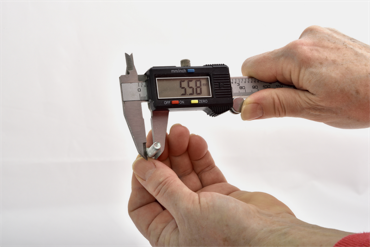
1. The MTR (Material Test Report): The Fastener’s “Birth Certificate.”
An MTR (typically complying with ISO 10204 3.1) is the most critical legal document in the fastener trade. It is not a generic certificate of conformity; it is a granular record of the metal’s journey from the melt shop to the finished part.

Deep Audit: 4 Essential Elements of a High-Quality 3.1 MTR
Heat Number Uniqueness: This is the anchor of traceability. If the heat number on the report does not match the head-mark stamping on the bolt, the batch is considered untraceable and illegitimate.
Chemical Composition Precision: The report must list all core alloying elements. For SUS316 Stainless Steel, Molybdenum (Mo) must be strictly between 2.0% and 3.0%.
Mechanical Property Verification: This includes actual test results for Yield Strength, Tensile Strength, Elongation, and Charpy Impact values.
Heat Treatment Parameters: The report must log tempering temperatures and soaking times, as these variables dictate the fastener’s internal stress levels and susceptibility to hydrogen embrittlement.
Expert Warning: Many suppliers attempt to pass off a “Type 2.1 Declaration of Compliance”. A 2.1 is merely a promise; only a 3.1 MTR provides the actual test results from the specific lot you purchased.
2. PMI (Positive Material Identification): The Shield Against Grade Substitution
Even with a perfect MTR, the risk of”in-transit “substitution remains a reality in B2B procurement. PMI Testing uses X-ray fluorescence (XRF) technology to instantly identify the elemental composition without damaging the sample.
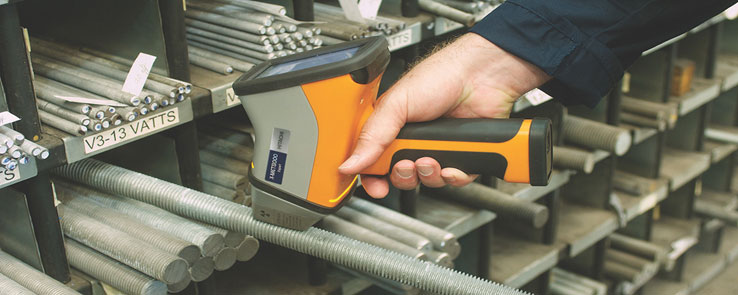
Why PMI is Mandatory for 2026 Projects
With the volatility of Nickel (Ni) and Molybdenum (Mo) prices, some mills may utilize”D-grade” alloys that fall just short of international standards to save costs.
Common Fraud: Substituting 200-series stainless for 304, or using “Moly-free” 304 in place of 316.
The Strategy: Implement a 5%–10%random PMI check upon arrival. If the chemistry deviates—even by 0.1%—from the ASTM or ISO standard, the entire lot should be rejected.
3. Salt Spray Testing (ASTM B117): Simulating 20 Years of Corrosion
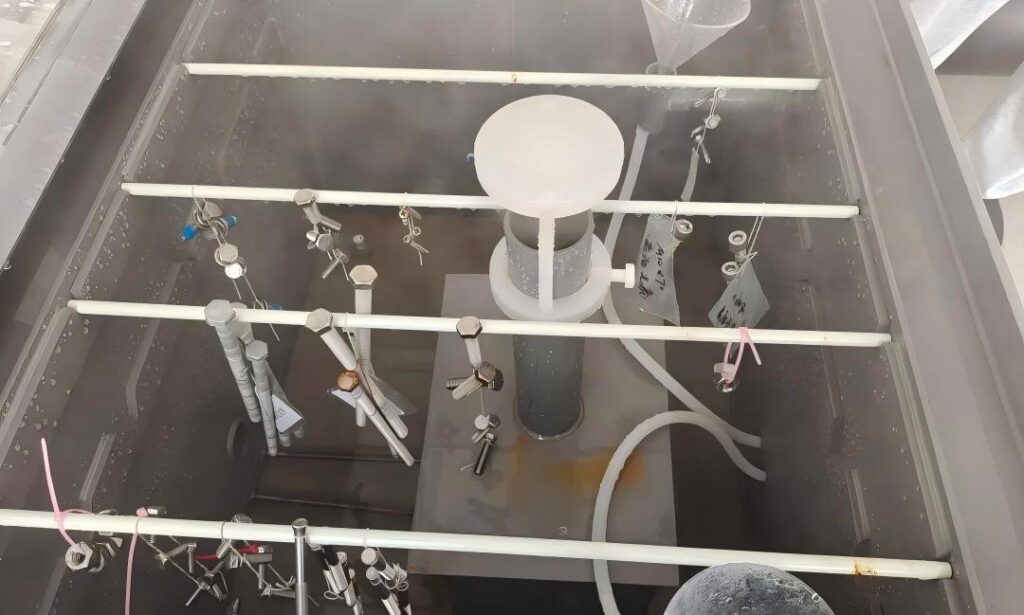
For coastal or industrial projects, the corrosion threshold is the ultimate performance metric. Salt Spray Testing (to ISO 9227 or ASTM B117) subjects the fastener to a 5%NaCl solution in a closed chamber to simulate decades of atmospheric attack.
2026 Fastener Finish Performance Benchmarks
| Finish/Coating Type | Salt Spray Duration (To Red Rust) | Primary Application | Cost Index |
| Clear/Blue Zinc | 24-72 Hours | Indoor, dry electronics | Low |
| Mechanical Galvanizing | 300-500 Hours | Industrial drives, urban outdoor | Medium |
| Dacromet/Zinc Flake | 500-1500 Hours | Automotive, wind turbine mounts | High |
| Hot-Dip Galvanized(HDG) | 1000-2000 Hours | Infrastructure, utility towers | Medium-High |
| SUS316 (Passivated) | 2000+Hours | Offshore oil&gas, desalination | Extreme |
Field Experience: The Case of the Disappearing Molybdenum
We recently audited a solar project where”SUS316″ U-bolts were pitting after only 4 months in a coastal environment.
The Investigation: We performed a PMI lab test on the failed samples. Despite the MTR claiming 2.1%Molybdenum, the actual metal contained only 0.5%.
The Lesson: Paper can be forged; chemistry cannot. In large-scale engineering, inbound PMI re-testing is the final line of defense against massive liability claims. If you are dealing with mixed metals, refer to our Galvanic Corrosion Guide to understand how material purity impacts joint life.
2026 Technology Trends: The Digital Quality Chain
1. QR Code Traceability
Leading manufacturers now laser-etch QR codes onto bolt heads or packaging. Scanning these provides an instant link to the cloud-hosted 3.1 MTR and salt-spray test photos, eliminating the loss of physical paperwork.

2. Carbon Footprint Data (CBAM)
With the Carbon Border Adjustment Mechanism, high-quality QC now includes “Green Data”. A modern MTR must prove not just how strong the material is, but how “green” its production was.

Procurement Quality Audit Checklist
3.1 MTR Verification: Does the heat number match the product? Is the chemistry compliant with the specific grade?
Lab Accreditation: Is the salt spray testing performed by an ISO/IEC 17025 accredited laboratory?
Hardness Gradients: Beyond tensile tests, has the fastener been tested for core-to-surface hardness to mitigate hydrogen embrittlement?
Packaging Integrity: Are the lot labels tamper-evident and clearly traceable?
Conclusion: Quality Control is the Infrastructure of Trust
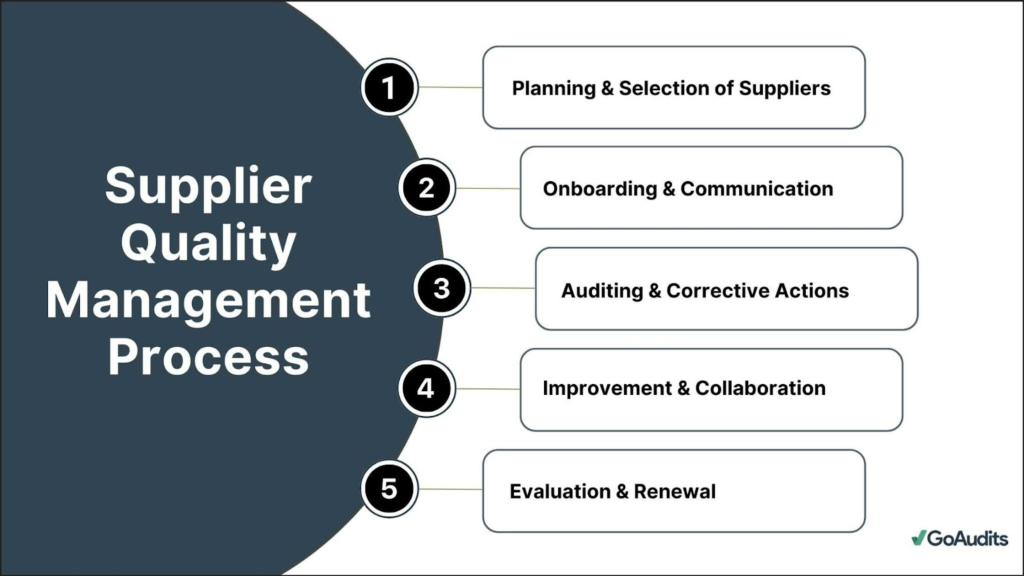
In the fastener industry, Quality Control is not an expense—it is insurance. By enforcing 3.1 MTR audits, implementing PMI spot checks, and demanding verified Salt Spray performance, you mitigate the risk of catastrophic failure and long-term litigation.
Need to establish a quality audit standard for your next project?
Contact our metallurgical team for a custom fastener audit template at +86 13451555650 or sales@szbilateral.com.